When I first saw Inaka no Okaki, my first thought was…
“Wait, what is this shape? It looks like a tiny log!” 😆
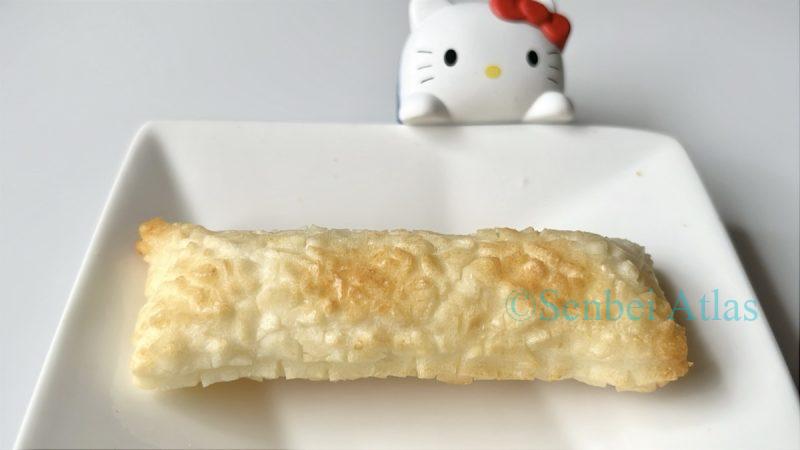
But the real surprise came after taking a bite.
“How can something that looks this chunky have such a light texture?” 😲
Even for Japanese people, Inaka no Okaki has a surprisingly unique appearance and texture. Let’s take a closer look at this interesting Japanese okaki.
Product Summary
| Cooking Method | Baked |
| Hardness | ★★★☆(Level 3: Standard) |
| Flavors | Salt |
Product Information
| Product Name | Inaka no Okaki (田舎のおかき) |
| Manufacturer | Iwatsuka Seika (岩塚製菓) |
| Quantity | 8 pieces |
| Price | Reference price: 200–250 yen |
| Where to Buy | Available at most supermarkets, and occasionally at drugstores and convenience stores in Japan. |
Package & Individual Wraps
The blue package is decorated with traditional Japanese geometric patterns, giving it a classic look that perfectly matches the rustic image of Inaka no Okaki.
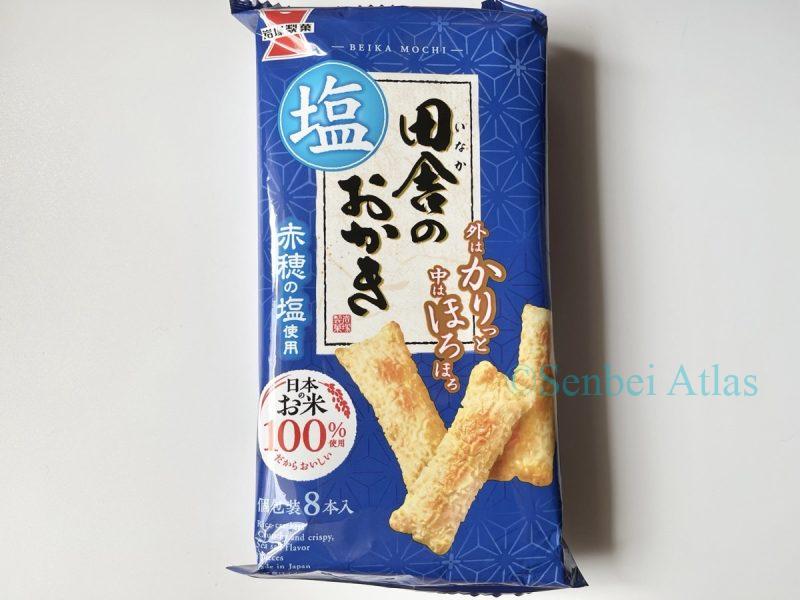
Iwatsuka is committed to using 100% Japanese-grown rice, and the package proudly highlights this with the phrase “Made with 100% Japanese rice.”
It also mentions that the crackers are seasoned with Ako salt, a well-known salt from Hyogo Prefecture. It shows the care put into the ingredients.
Note: The Rice Used in Most Senbei
Most senbei sold in supermarkets are not made from 100% domestic rice. They are typically a blend of domestic and imported rice, or simply made from imported rice.
Each individual wrapper contains one cracker.
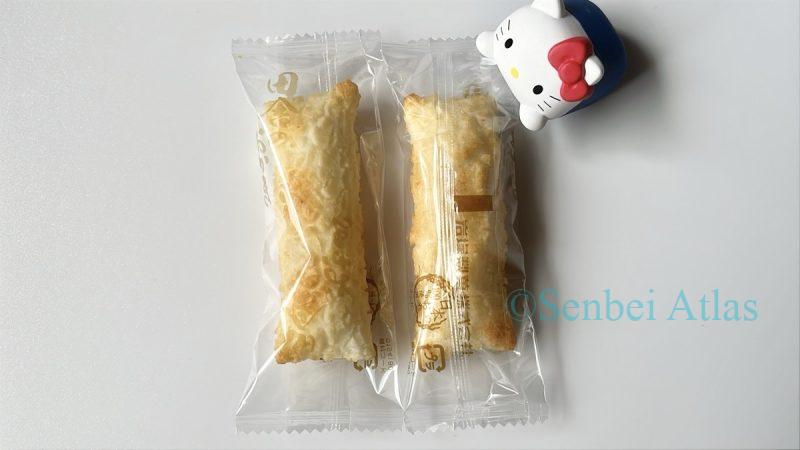
When I saw it, my first thought was, “What is this shape?” 😲
Ingredients & Other Information
You can check the ingredients, allergen information, and other details on the back of the package.
| Main Ingredients | Glutinous rice (Japanese-grown), vegetable oil, salt, etc. |
| Allergy Information | Soy |
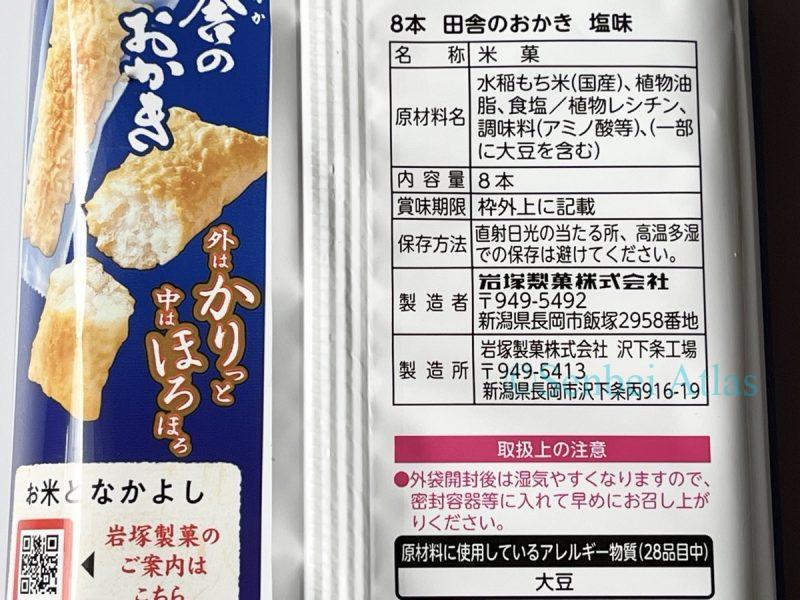
This rice cracker is made with glutinous rice, which means it’s an okaki, not a senbei.
I explain the difference between senbei and okaki in this article.
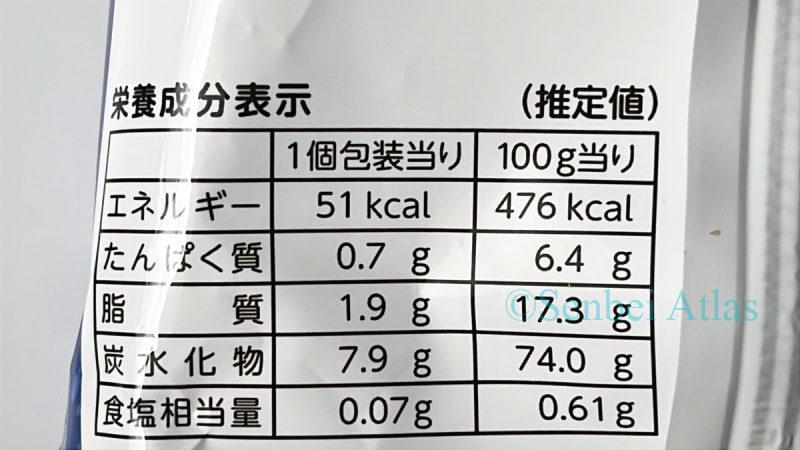
Flavor & Texture
Before talking about the flavor and texture, take a closer look at this shape.
Seriously… it looks like a tiny log, doesn’t it? 😂 The rough surface even looks like tree bark 🌲
It looks like a tiny log, so you’d think it would be hard, right?
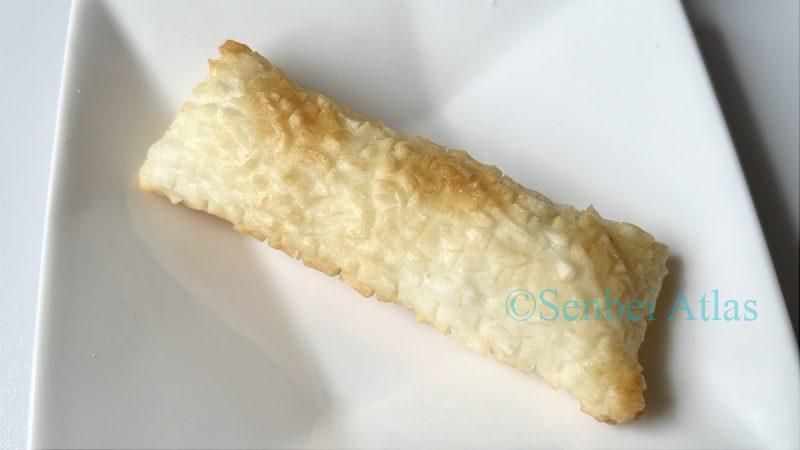
So I took a bite expecting a hard crunch… and then came the second surprise.
“Wait… what is this texture? It’s completely different from how it looks!” 😲
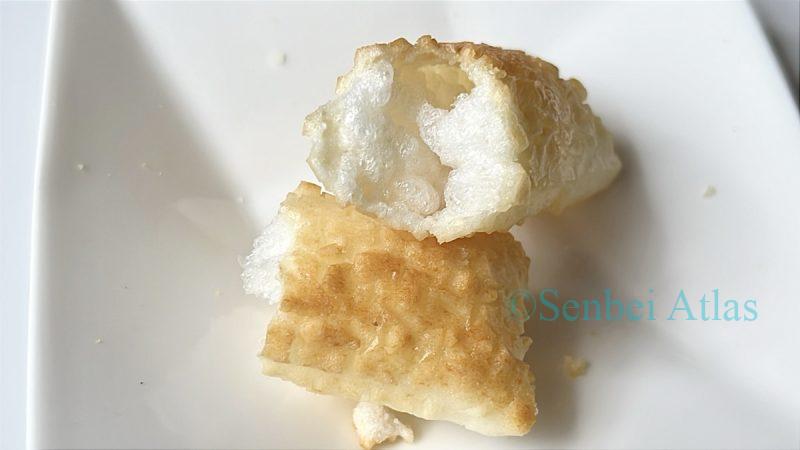
The outside is crispy, but the inside is light, airy, and has a soft, crumbly texture.
Can you see the airy texture from this cross section?
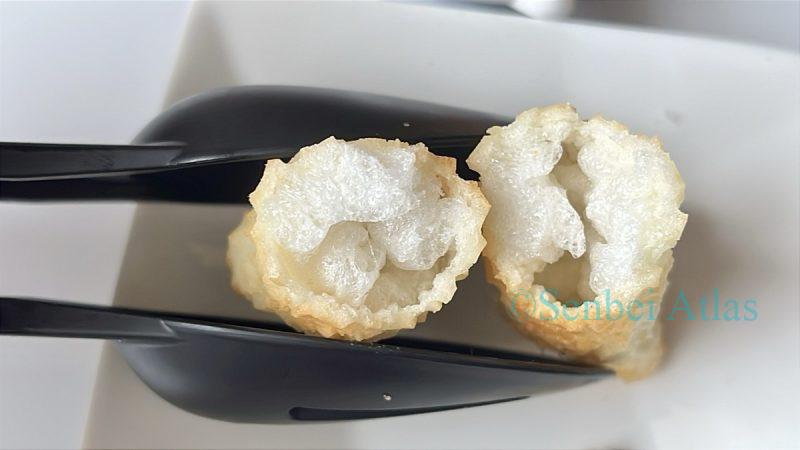
The salt seasoning is just right. Not too strong, not too mild. As you keep chewing, the natural sweetness of the rice slowly comes through.
With its unique appearance, surprisingly light texture, and carefully balanced flavor… honestly, this is the kind of quality you wouldn’t be surprised to find in a premium Japanese rice cracker ✨
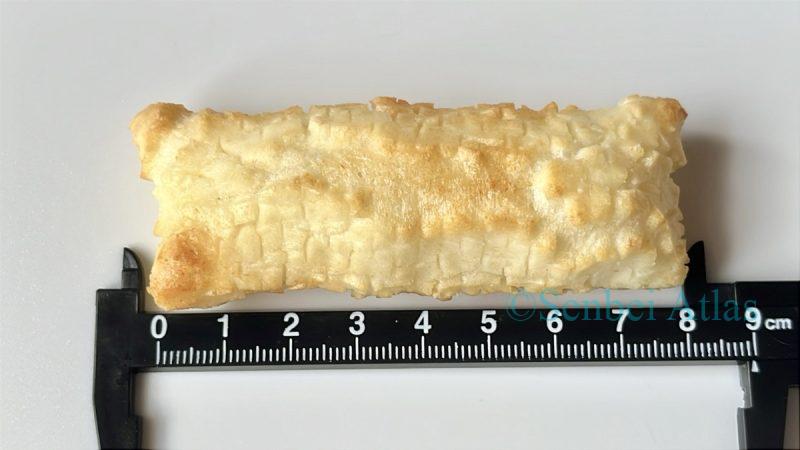
Size
For those curious about the size, here it is compared to a ruler. Each cracker is about 7 cm.
Love refined salt-flavored rice crackers? Try this one too.