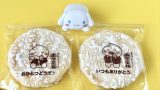
When describing the texture of senbei in Japanese, you’ll often hear words like Pari Pari (パリパリ) and Saku Saku (サクサク).
These words, which repeat the same two sounds to describe a sound, texture, or state, are called onomatopoeia in Japanese.
Today, I’ll introduce some Japanese onomatopoeic words used to describe different senbei textures.
Once you know these, you’ll be one step closer to becoming a true Japan expert! 😆
Japanese Onomatopoeia for Senbei Textures
First, here’s a quick list of the main onomatopoeic words used to describe senbei textures.
| English texture | Japanese onomatopoeia |
| Crispy & Crumbly | Saku Saku (サクサク) |
| Crispy & Light | Pari Pari (パリパリ) |
| Crispy & Crunchy | Kari Kari (カリカリ) |
| Hard & Crunchy | Bari Bari (バリバリ) |
| Very Hard | Gari Gari (ガリガリ), Gori Gori (ゴリゴリ) |
Now, let’s take a closer look at each one.
Saku Saku
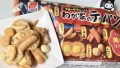
The texture of soft senbei, like Happy Turn, is perfectly described as Saku Saku (サクサク).
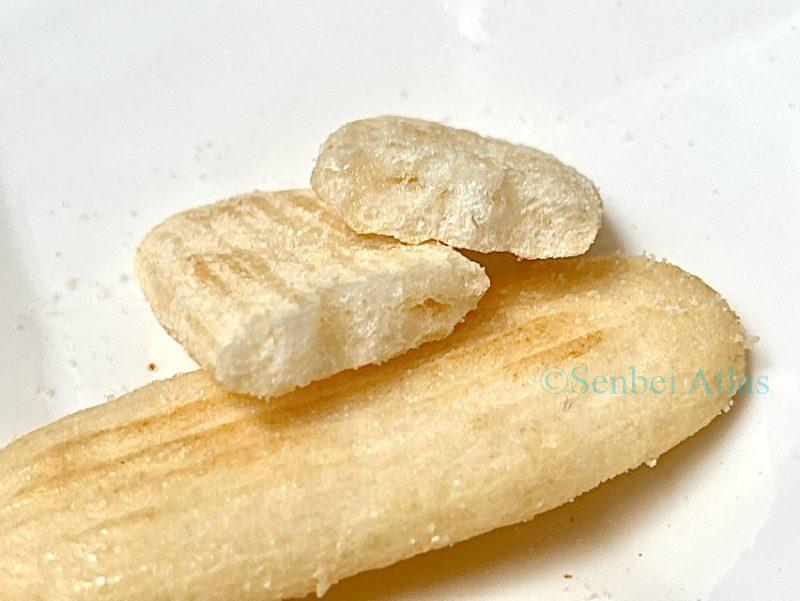
They’re made with a fine, dry texture that seems to melt as you chew.
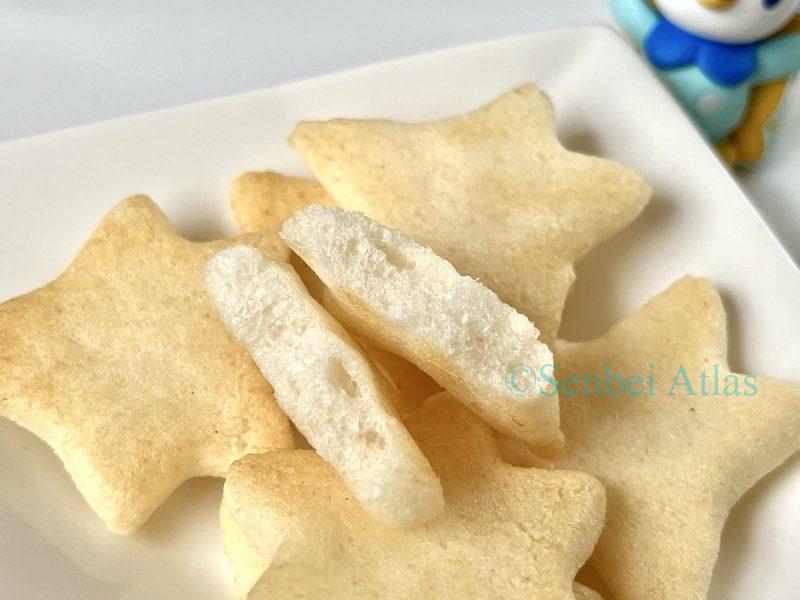
If you’re looking for a Western-style comparison, think of a light, airy cookie 🍪
Pari Pari
For thin and light senbei, like usuyaki senbei, Pari Pari (パリパリ) is the most commonly used expression.
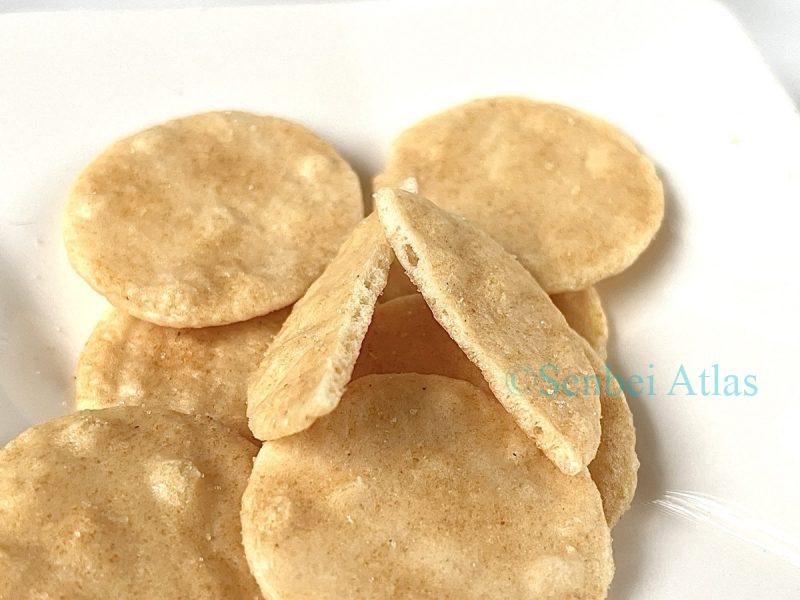
It’s easy to understand why: when you bite into one or break it apart, it makes that very “Pari!” sound.
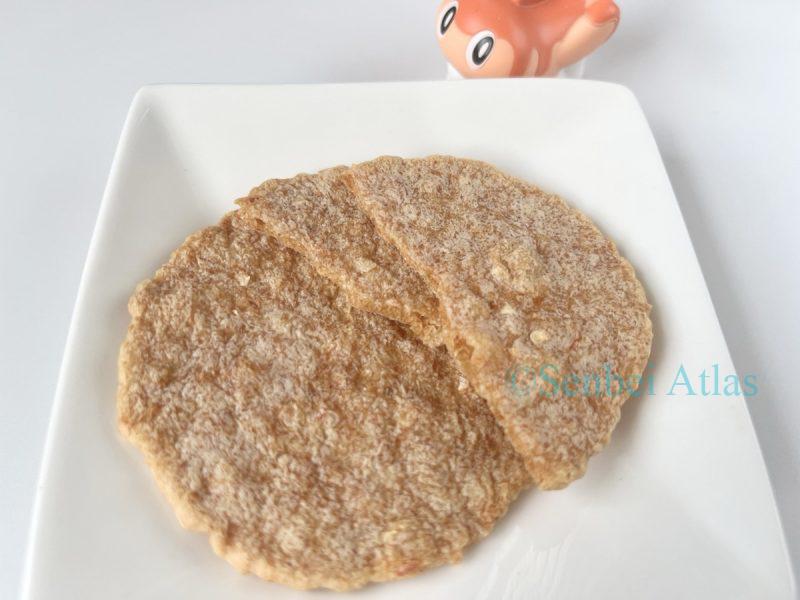
The texture of potato chips is also often described as Pari Pari (パリパリ) in Japanese.
Kari Kari
Pari Pari is often used for thin, flat foods like potato chips. Kari Kari (カリカリ), on the other hand, describes something that’s a little harder than Pari Pari, especially when it’s small and crispy.
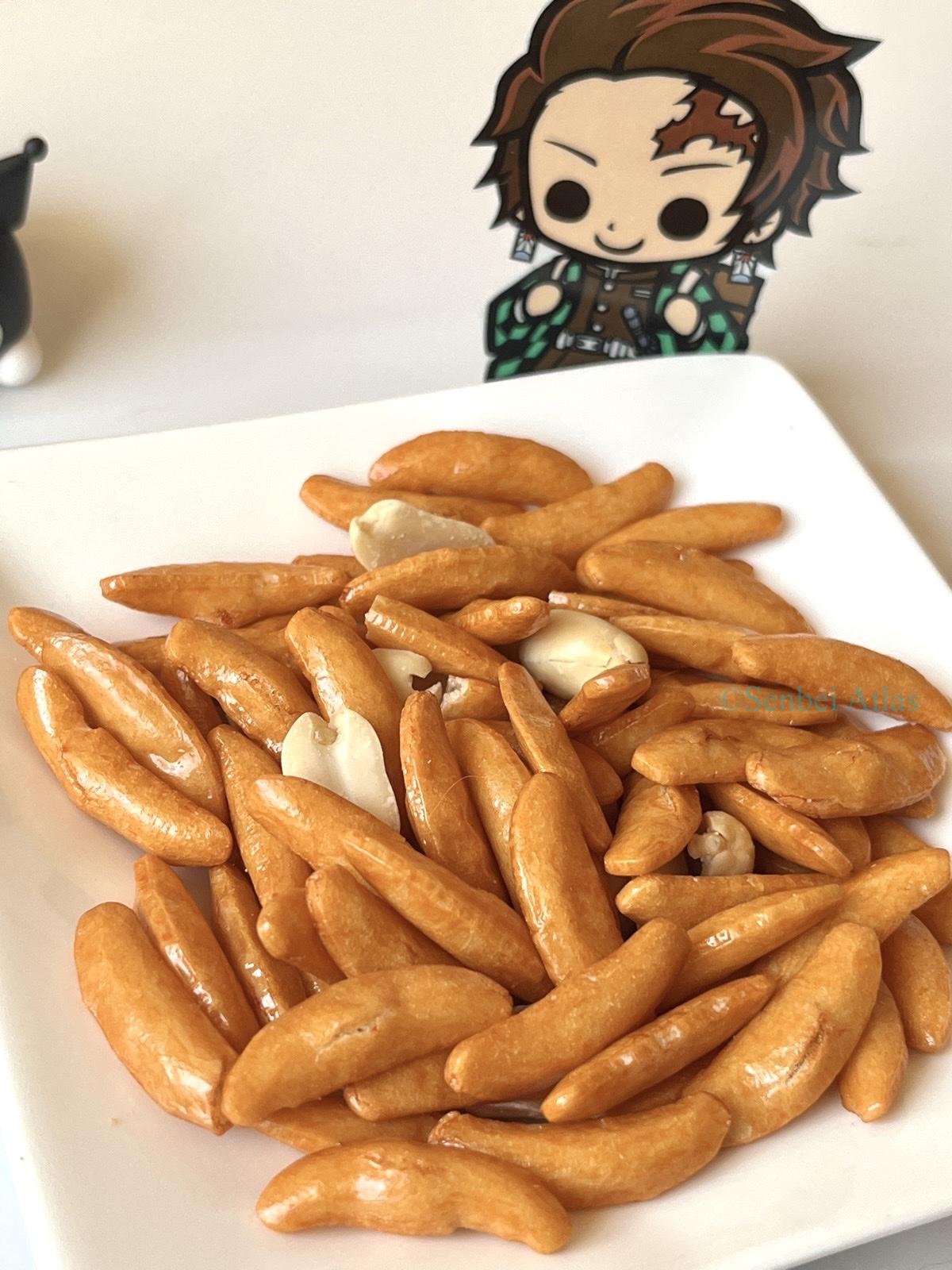
Kaki no Tane is a perfect example. The peanuts that come with Kaki no Tane are also Kari Kari.
Bari Bari
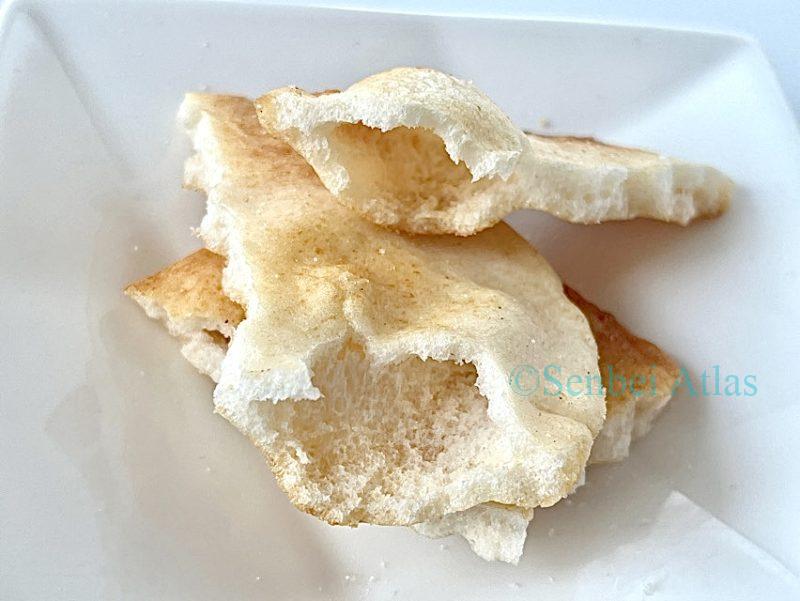
Senbei with a moderate amount of crunch—not too hard, but with a satisfying bite—can be described as Bari Bari (バリバリ).
Gari Gari & Gori Gori
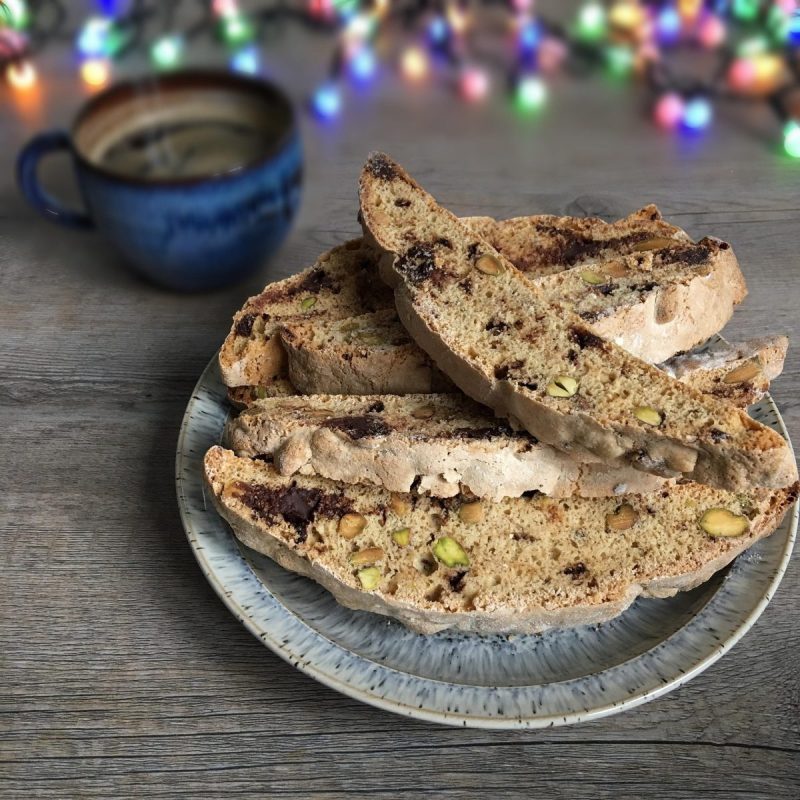
For hard senbei that you really have to bite into with your back teeth, leaving little pieces in your mouth until you’ve chewed them thoroughly, the onomatopoeia Gari Gari (ガリガリ) and Gori Gori (ゴリゴリ) are a perfect fit.
These are especially common with traditional Japanese senbei.
When you actually eat one, you can hear a Gari Gari or Gori Gori sound echoing in your head with every bite, so I think you’ll understand exactly why these words fit once you try one! 😆
If you want a Western-style comparison, biscotti is probably close.
Other Meanings of These Onomatopoeic Words
The onomatopoeic words I introduced above describe senbei textures, but some of them also have completely different meanings.
So, let’s take a quick look at those too.
Saku Saku (サクサク) can also mean that something is progressing or moving smoothly.
Example: 休日前だけ仕事がサクサク進む。
My work only goes smoothly before a holiday.

Kari kari (カリカリ) can also describe someone who is irritated and quick to get angry.
Example: カリカリしても渋滞は進まないよ。
Getting cranky won’t make the traffic move.
Bari Bari (バリバリ) can also describe someone working or doing something energetically and enthusiastically.
Example: 毎日、明日からバリバリ働こうと思っている。
Every day, I think, “I’ll work really hard starting tomorrow.
See how versatile Japanese onomatopoeia can be? Isn’t it interesting?
I also think the way Japanese often repeats the same sound twice is pretty unique.
Next time you eat senbei, try describing the texture using Japanese onomatopoeia!
If a foreigner ate senbei and said, “This is Pari Pari!”, I’d be seriously impressed by their Japanese skills 😆
If you’re interested in unique aspects of Japanese culture, you’ll love this article too!