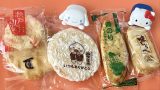
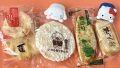
In my last post, I talked about why Japanese senbei are so often individually wrapped. This time, let’s take a closer look at the fun designs you’ll find on those wrappers.
Many Senbei Wrappers Have Different Designs
If you’re snacking on senbei in Japan, take a second to look at the wrapper before you toss it. You might notice some cool little details.
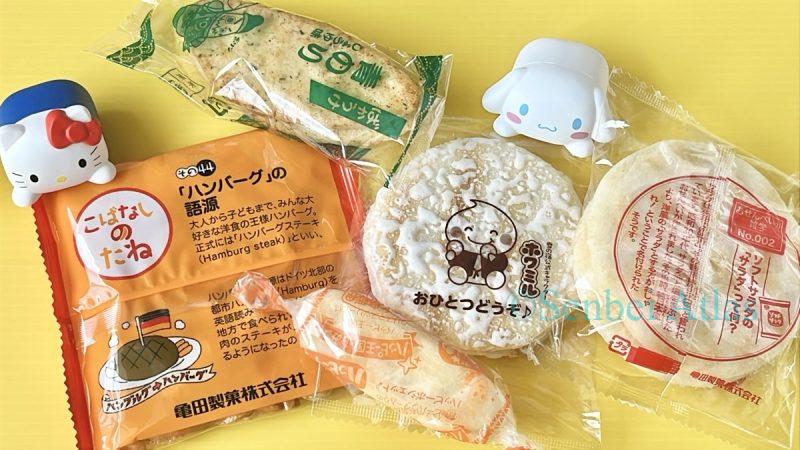
Most of these designs fall into two categories: visual variations and little bits of trivia.
Visual Variations
Some wrappers change things up just by tweaking the look, like using different character designs.
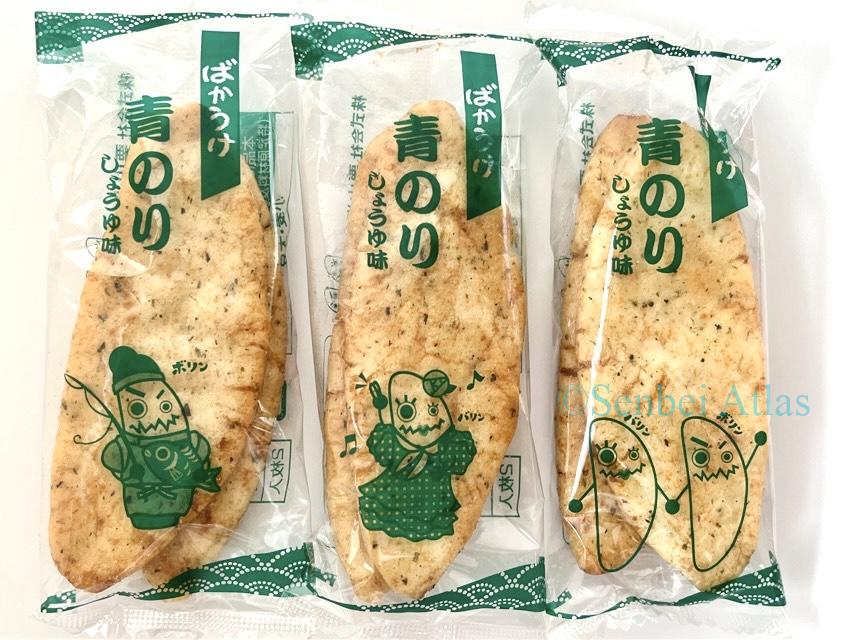
Bakauke (ばかうけ) features original characters changing into different outfits.
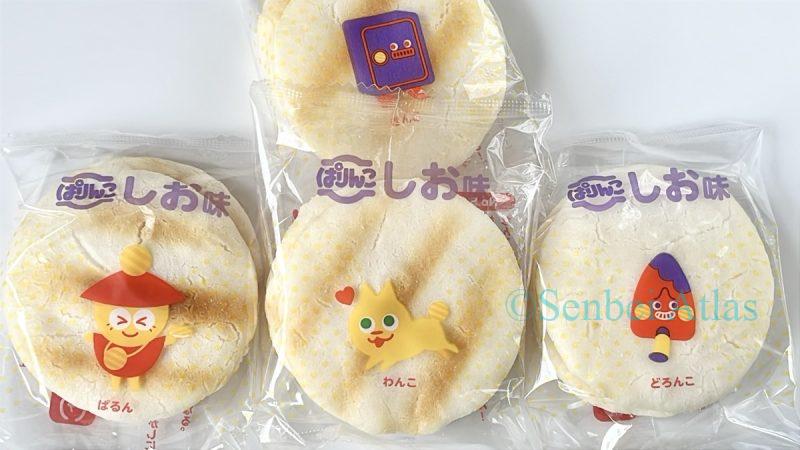
Parinko (ぱりんこ) uses various characters printed in full color.
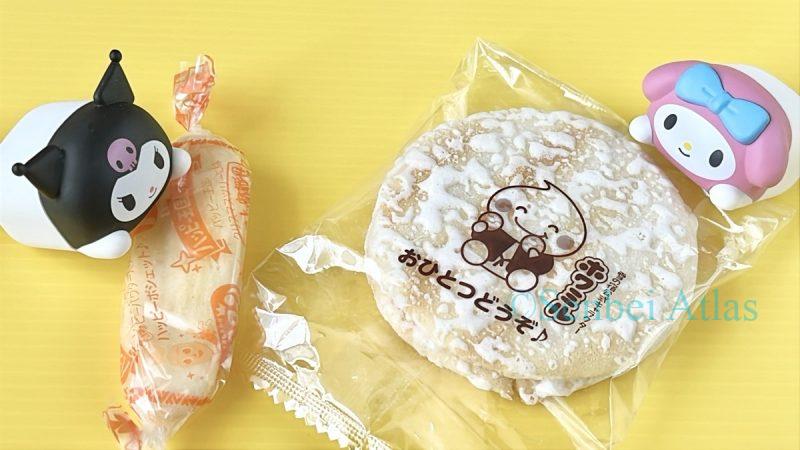
With Yuki no Yado (雪の宿), the character’s pose or speech changes from one wrapper to another.
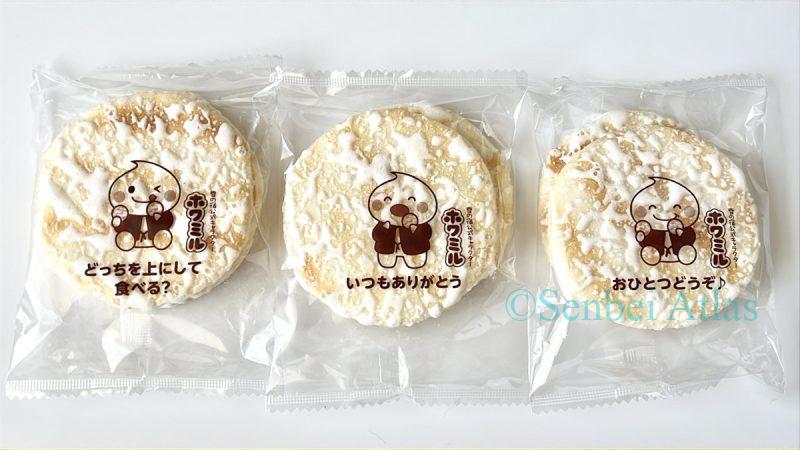
You’ll also see short messages like “Here you go” or “Thanks as always,” which are clearly meant for sharing with someone.
It’s a great example of how Japan’s sharing culture — mentioned in the previous post — shows up even in something as small as individual packaging.
Trivia and Little Messages
Another common style is wrappers that include small bits of information.
They’re designed so you can enjoy a little trivia while eating.
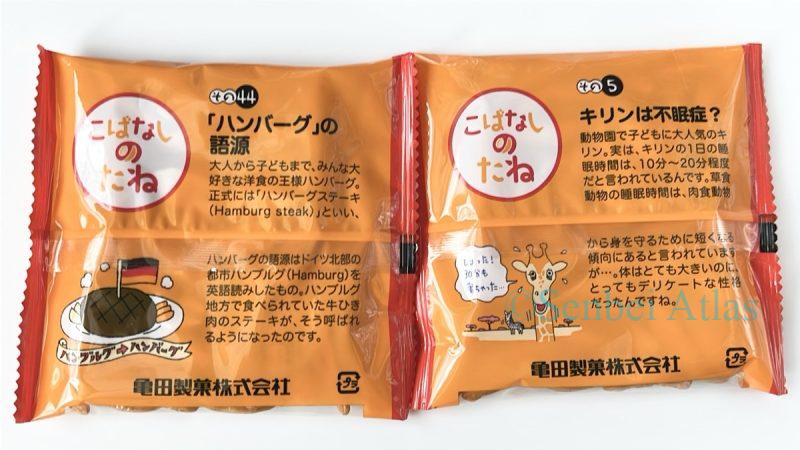
A good example is Kaki no Tane (柿の種), where the larger wrapper leaves plenty of space for text. So you’ll often find longer, more detailed trivia printed on it.
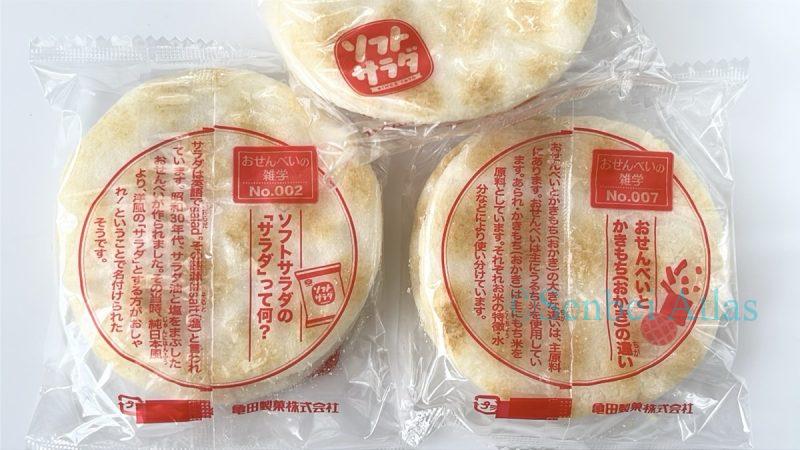
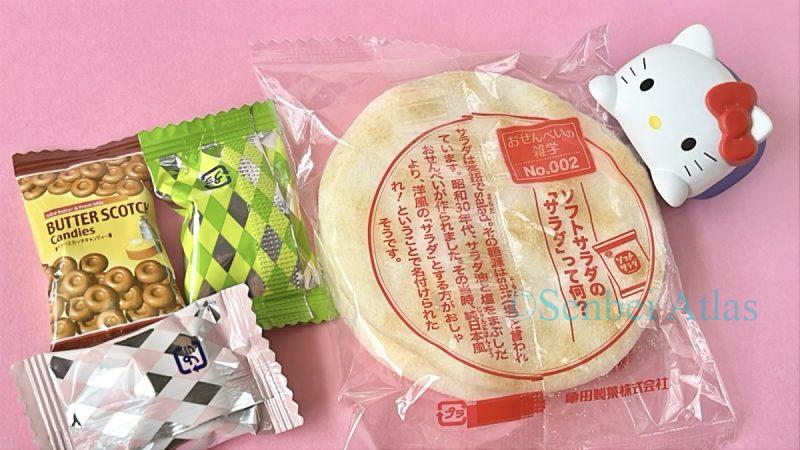
Soft Salad (ソフトサラダ) wrappers often include small bits of trivia about senbei.
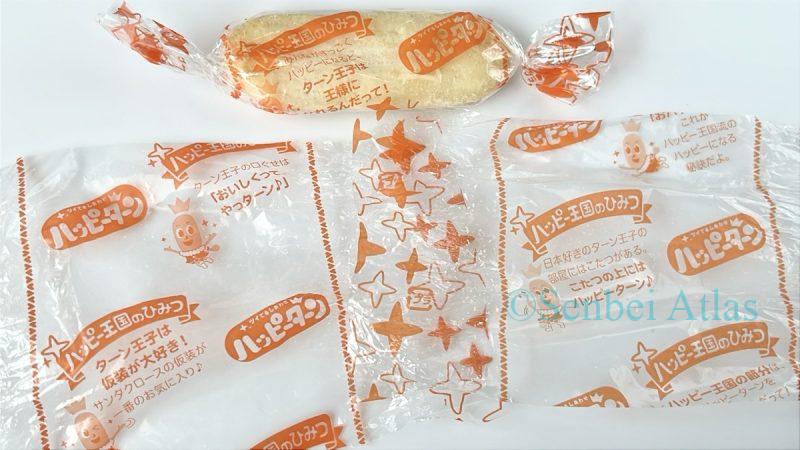
Happy Turn (ハッピーターン) uses a candy-style wrapper, so they may all look the same at first, but when you open them up, you’ll notice the messages are different.
What you’ll find on Magari Senbei (まがりせんべい) are regional dialects from across Japan.
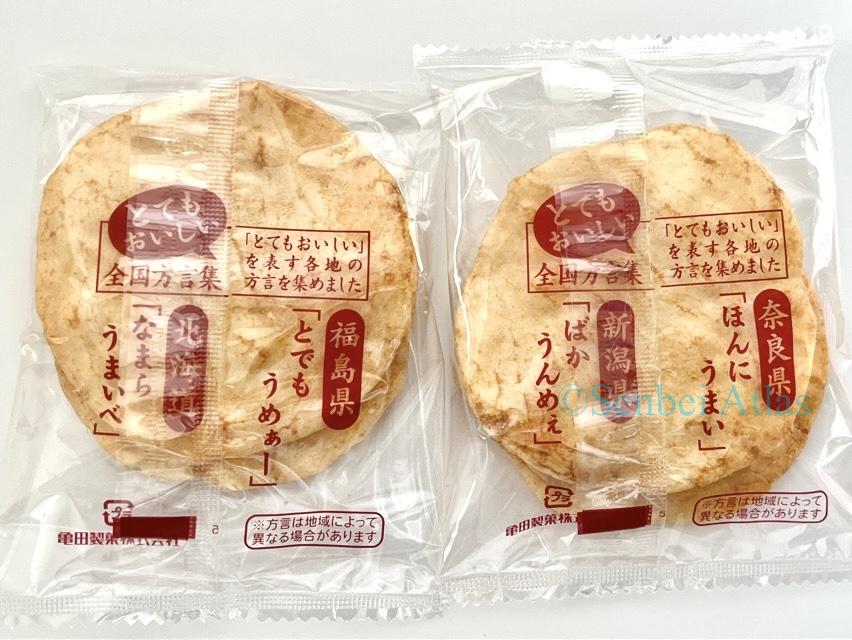
Even for Japanese people, a lot of these aren’t very familiar, which makes them fun to read 😊
Why Do Senbei Wrappers Have Different Designs?
While some other snacks change their wrapper designs occasionally, you don’t see it as often as you do with senbei.
Especially the trivia—that seems unique to rice crackers. I thought about why this might be.
It Takes Time to Eat
With chocolate, candy, or cookies, you usually pop them in your mouth in one bite, and the wrapper is done.
On the other hand, most senbei take at least two bites, and you spend more time chewing.
This means the wrapper stays in your hand for a while. Having different designs or trivia on it keeps you entertained while you eat.
Larger Surface Area
Senbei are generally larger than other snacks, so the wrappers have more surface area. This provides enough space to print trivia.
Sharing Culture
As you can see from the Yuki no Yado designs meant for handing out, Japan’s strong sharing culture might play a big role.
When you give a snack to someone, different designs or trivia become a good conversation starter, turning the senbei into a communication tool.
Visual Importance in Food Culture
Don’t you think Japanese food, like sushi, often looks beautiful?
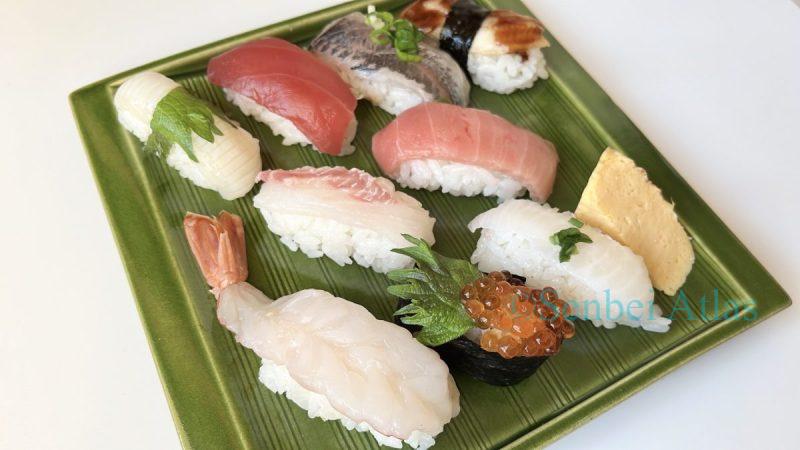
In Japanese food culture, the visual presentation—whether it looks beautiful or appetizing—is just as important as the taste itself.
Making the wrappers look interesting feels like an extension of that.
These unique senbei wrappers aren’t just about the taste; they play a role in making the experience fun and satisfying for the eyes too.
Hospitality from the Eater’s Perspective
I can feel the manufacturer’s hospitality, thinking, “The person eating this will enjoy the different designs and trivia.”
Rather than whether changing the wrappers leads directly to sales, it conveys a Japanese delicateness—making things with the person’s feelings in mind so they can truly enjoy their snack.
A Part of Japanese Culture
It’s not just about individually wrapped senbei. In Japan, it’s very common to change the exterior design even when the product inside remains the same.
Beyond major events like Christmas, package designs change frequently for each season—spring, summer, autumn, and winter—as well as for limited-edition collaborations.
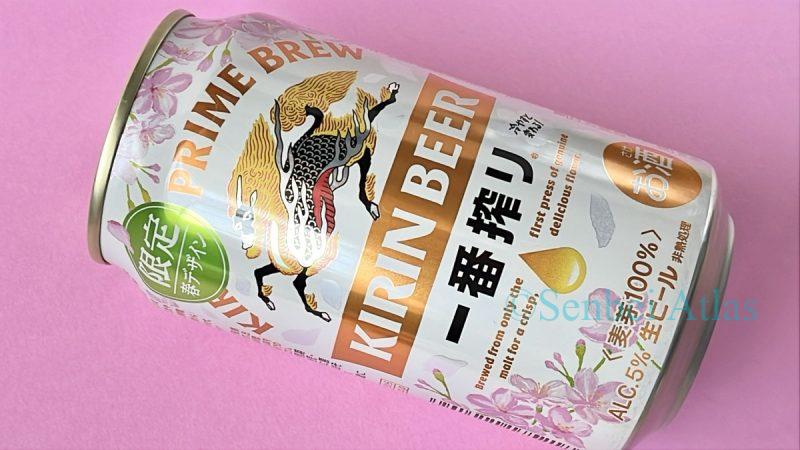
In Japan, by frequently changing the packaging, it creates a sense of the season or gift-giving and stimulates a desire to collect. It’s a standard part of the culture to enjoy these small changes as added value.
Thinking about it this way, it makes sense that individual senbei wrappers change as an extension of this culture ✨
If you’re interested in unique aspects of Japanese senbei, you’ll love this article too!