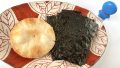
As I reported in my previous post, major manufacturers have almost stopped producing “Norimaki Senbei” (seaweed-wrapped rice crackers), and I couldn’t find them at any local stores 😢
It’s a huge disappointment, but I won’t give up. With my pride as a National Cooking License holder, I’ve decided to make my own Norimaki Senbei!
Well, technically, I’m just wrapping seaweed around store-bought crackers myself! 😆
This time, I tested 5 different types of Senbei (Japan’s Savory Umami Rice Snacks) to see how they pair with Nori.
Which one will be crowned the “Best of Norimaki”? Let’s find out!
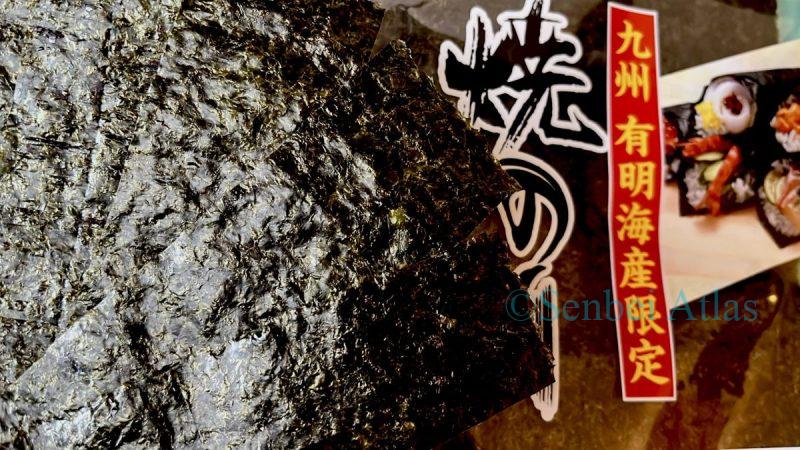
The Seaweed I Chose
Before we dive in, let me explain the seaweed (Nori) I’m using for this experiment.
Seasoned or Roasted?
There are two main types of Nori: “Seasoned Nori” (Ajitsuke-nori) and “Roasted Nori” (Yaki-nori).
Since the crackers themselves are already flavorful, I chose simple Roasted Nori with no added seasoning.
(In fact, the “Nori P Pack” I reviewed recently also uses unseasoned roasted Nori for its rice crackers.)
Domestic or Imported?
There are various types of Nori available in Japan, and the flavors can differ significantly between domestic and imported ones.
Generally, Japanese-grown Nori tends to have a much stronger, fresh ocean aroma.
For this challenge, I wanted to prioritize that vibrant aroma to see how it stands up against the bold flavors of the crackers, so I’m using domestic Japanese Nori 🇯🇵
The 5-Cracker Lineup
I’ve selected a wide range of crackers—from those that are guaranteed to pair perfectly with seaweed to those with unknown potential.
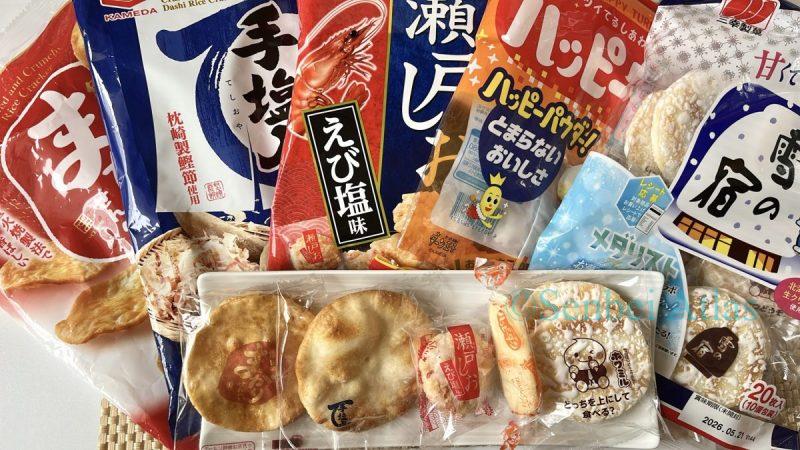
- Magari Senbei (まがりせんべい)
Crispy crackers with a sweet soy sauce flavor. These are the closest to the standard Norimaki crackers, which are typically seasoned with non-sweet, savory soy sauce. - Teshioya (手塩屋)
Crunchy crackers seasoned with salt and “Dashi” (Japanese soup stock) umami. - Seto Shio – Shrimp Flavor (瀬戸しお えび味) *Detailed review coming soon!
Fried rice crackers with a savory shrimp flavor 🦐 - Happy Turn (ハッピーターン)
Light and crispy crackers with a unique, strongly sweet and salty powder. - Yuki no Yado (雪の宿)
Crispy crackers topped with a combination of sweet milk cream and salt. Almost no one would think to wrap these in seaweed, which is exactly why I want to challenge this pairing.
Norimaki Senbei Review
Let’s dive into the actual tasting!😋
1. Magari Senbei
Yep, absolutely delicious! The moment I took a bite, I thought, “I love this! 😍”
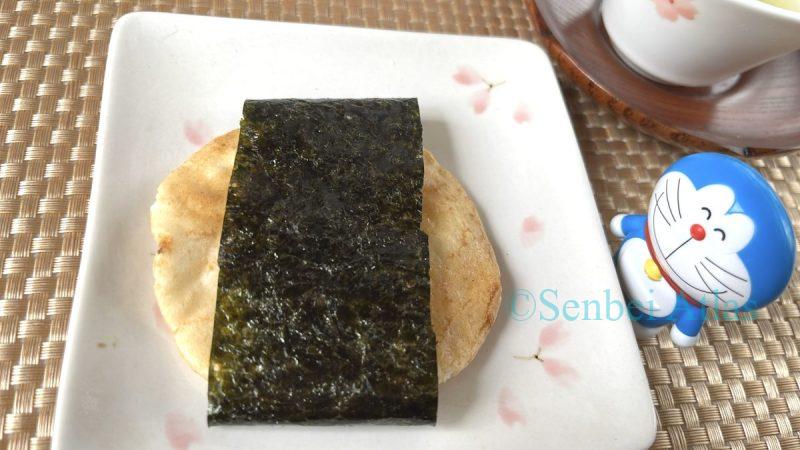
The sweet and salty soy sauce flavor of the cracker and the refreshing aroma of the nori are a match made in heaven! 💕
In Japan, we have a food called “Isobeyaki (pictured below),” which is mochi seasoned with sugar-soy sauce and wrapped in seaweed—and this taste links perfectly with that. It’s a flavor very familiar to Japanese people 🇯🇵
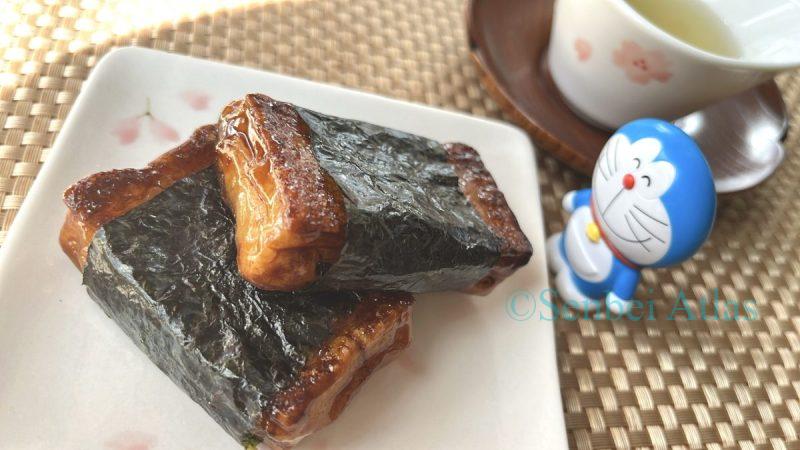
Also, because Magari Senbei is a thin and crispy cracker, the texture creates a great rhythm with the crunchiness of the nori ✨
Traditional “Norimaki Shoyu Senbei” usually has a sugarless, salty soy flavor and a hard texture, so it’s a “love it or hate it” thing.
However, since this one uses sugar-soy sauce, it has a mild flavor and a crispy, easy-to-eat texture, making it a norimaki cracker that everyone can enjoy.
Of course, Magari Senbei is delicious enough on its own, but it’s so good that I wish they would sell a separate norimaki version of it 😋
🍘 Overall Rating
・Pairing with Nori: ★★★
・Improved with Nori: ★★★
・Originality: ☆☆☆
* “Originality” indicates how much it breaks the mold of standard Norimaki crackers. A high score means a unique experience exclusive to DIY wrapping.
2. Teshioya
The collaboration between Teshioya’s mellow dashi-salt flavor and the nori creates a very elegant taste 🍵
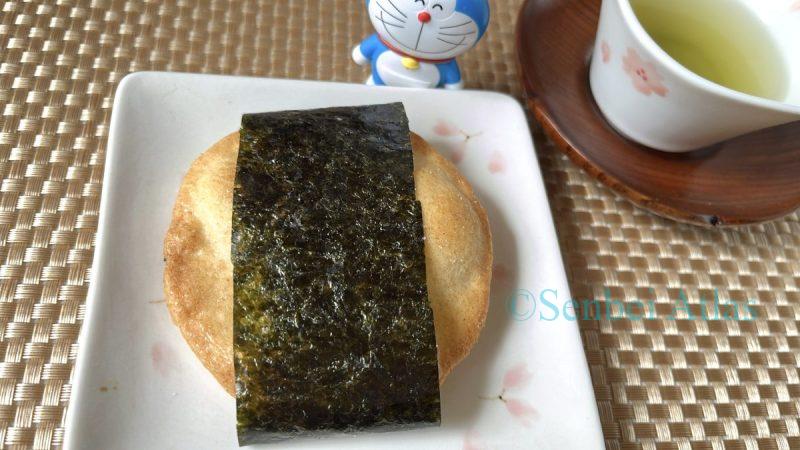
It feels as though the dashi salt in Teshioya enhances the vivid aroma of the seaweed; in terms of flavor, the nori definitely takes center stage.
When you eat Teshioya on its own, you can really taste the depth of the dashi, but once wrapped in nori, the seaweed’s flavor takes the lead, and the dashi shifts into more of a “secret ingredient” role.
As for the mouthfeel, the cracker has a solid, crunchy texture (gari-gari), while the nori is light and crisp (pari-pari). This contrast in textures makes it a joy to eat—very Good 👍
It was delicious with the nori, but if you want to fully savor the dashi flavor, I’d say it’s better without it 😅
However, since the compatibility between Teshioya and nori is genuinely good, I think the best way to enjoy them is “alternating bites“: eat the cracker first, then have the nori as a palate cleanser ✨
🍘 Overall Rating
・Pairing with Nori: ★★☆
・Improved with Nori: ★☆☆
・Originality: ★☆☆
3. Seto Shio – Shrimp Flavor
This is the only “fried” cracker among the five. A light and crispy fried senbei with small shrimp kneaded into the dough 🦐
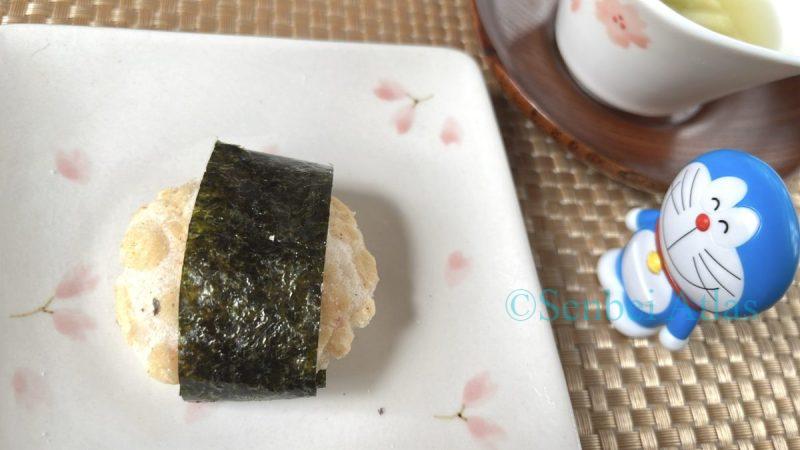
When you eat Seto Shio on its own, you get a direct sense of its oily character.
However, when wrapped in nori, it feels as if the seaweed absorbs the excess oil, thinning out that oily feel and leaving behind only the rich, delicious “heavy-umami” (kotteri-kan) that you actually want to taste.
On top of that, the shrimp flavor and the briny aroma of the nori harmonize perfectly, creating a much deeper and tastier experience 😍
The combination of Seto Shio’s light crunch and the nori’s crispness is excellent, and thanks to the seaweed, there’s no oily aftertaste.
This is a total upgrade! It’s even better than eating Seto Shio by itself 👍
While the harmony between shrimp and nori was expected, how it refined the richness of the oil was a pleasant surprise.
A new “norimaki cracker” has been born that could honestly be sold just as it is!
🍘 Overall Rating
・Pairing with Nori: ★★★
・Improved with Nori: ★★★
・Originality: ★★★
4. Happy Turn
I was shocked. Shocked by the immense power of the “Magic Powder” 😧
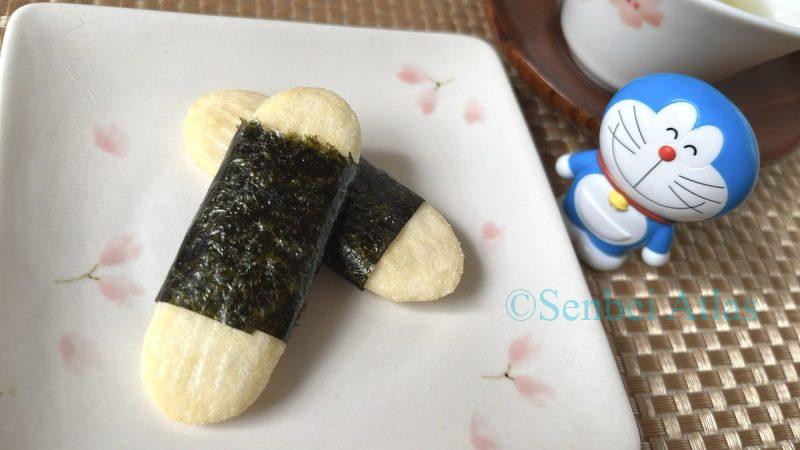
When I tried Teshioya, the nori became the star, so I expected the same with Happy Turn. But I was wrong 😧
The sweet and salty “Magic Powder,” with its strong sweetness, actually overpowered the flavor of the nori!
It didn’t feel like “Seaweed-wrapped Happy Turn” as much as it felt like “Happy Turn (Seaweed Flavor).” 😆
Regarding the texture: as I chewed the Happy Turn and nori together, the nori absorbed moisture and seemed to interfere with the light, crispy crunch of the cracker 💦
Also, the Happy Turn melts away quickly in your mouth, but the nori lingers a bit stickily even after the cracker is gone, leaving a nori aftertaste.
Whether you view this “time-lag attack” as a nice flavor gradient is up to you… 🐇🐢
To be honest, if you’re eating it as a regular snack, I think Happy Turn is tastier on its own.
However, This “Happy Turn (Seaweed Flavor) ” is a total game-changer as a “snack for beer”! 🍺
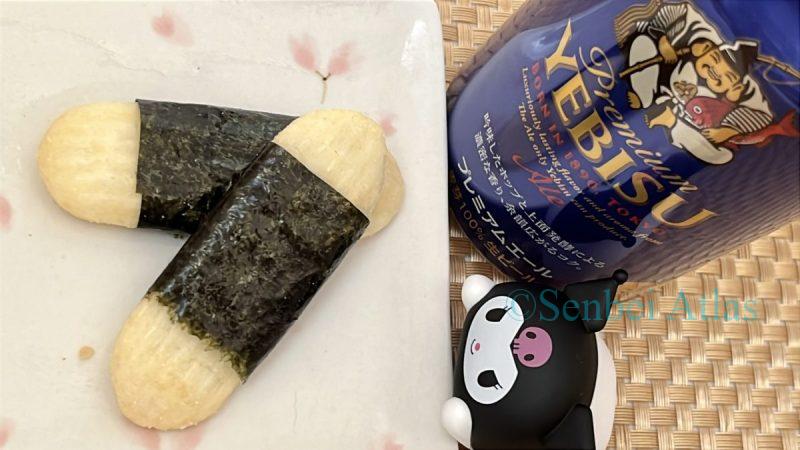
The nori aftertaste actually pairs perfectly with beer, and the imbalance in texture is completely canceled out by the refreshing carbonation.
Plus, once you’re a bit tipsy, your tongue gets a little numb, so you won’t even mind those delicate textural details! 😆
🍘 Overall Rating
・Pairing with Nori: ★★☆
・Improved with Nori: ★☆☆
・Originality: ★★★
5. Yuki no Yado
This cracker is a bit unique: one side is coated with a sweet milk cream, while the other side is salty.
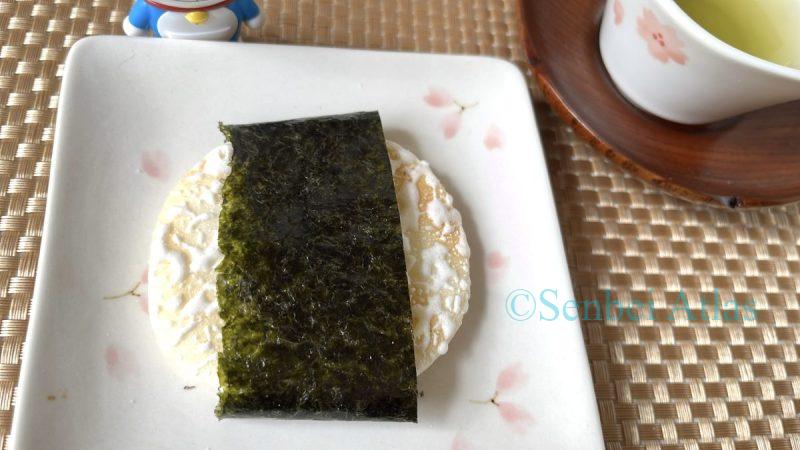
The mellow sweetness of the milk cream and the saltiness are in such perfect balance that I think it’s a great product that makes the most of “The Contrast Effect.”
It’s one of my all-time favorite senbei 💕
However, when I tried wrapping this Yuki no Yado in nori… I’m sorry, but it didn’t go together at all 😭
When I wrapped it and tried taking a bite, the deliciousness of the milk cream was swallowed up by the flavor of the nori, and the very essence of what makes Yuki no Yado good was completely stripped away 😨
In terms of texture, much like with Happy Turn, the cracker is light and crispy, so the nori ends up being the only thing left in your mouth at the end.
It left me with an aftertaste that made me tilt my head in confusion, thinking, “Wait, what did I just eat?” 😂
While I knew there was a high possibility they wouldn’t match, I had a tiny bit of hope—maybe 1 millimeter—that it might turn out unexpectedly delicious.
But I never imagined it would be this incompatible…
Precisely because I love Yuki no Yado so much, I will never be wrapping it in nori ever again.
🍘 Overall Rating
・Pairing with Nori: ☆☆☆
・Improved with Nori: ☆☆☆
・Originality: ★★★
Announcing the “Best of Norimaki”
My pick for the “Best of Norimaki” is a tie for first place: Magari Senbei and Seto Shio (Shrimp Flavor)! 🏆✨
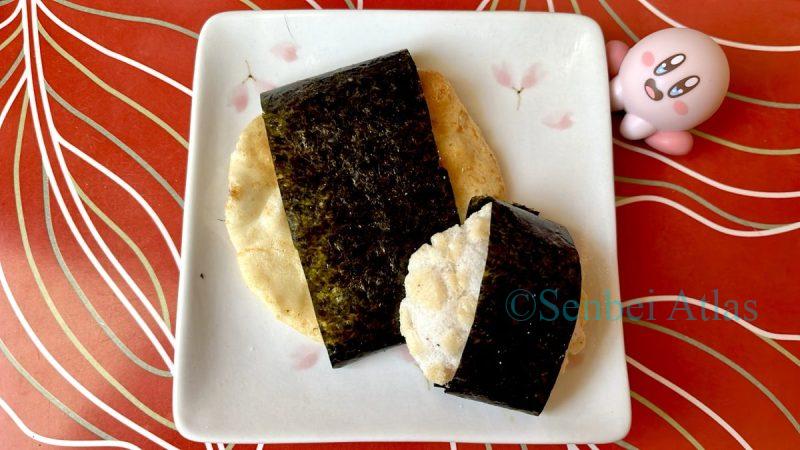
If we’re talking strictly about flavor, “Norimaki Magari Senbei” was the winner.
However, “Norimaki Seto Shio” earned high marks for its combination of great taste and Originality (it’s not something you see often in stores, and it was even better than I expected) 👍
Whether or not you value Originality is entirely up to personal preference—so go ahead and find your own “Best of Norimaki” ✨
In my next article, I wrote about the common color patterns in senbei packaging that I noticed while writing this post.
As a writer who has studied color guides, I analyzed the “secrets of color” that make senbei look so appealing—please check it out!