Many people might think Japanese senbei are always incredibly hard.
It’s true that some traditional varieties give your jaw a serious workout.
But the reality is quite different!
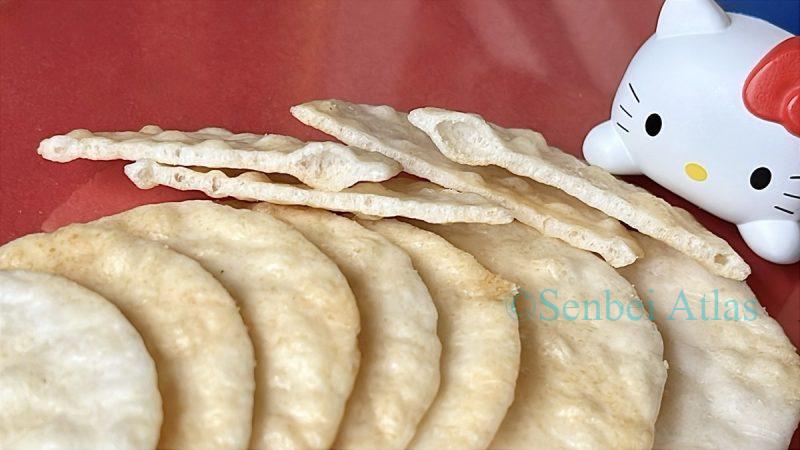
Actually, most senbei you’ll find in Japan today are light, crispy, and super easy to enjoy.
Let’s explore why senbei have the so-called “rock-hard” reputation and what the modern senbei scene is really like.
Why Do People Think Senbei Are So Hard?
I think this mainly comes down to the following three reasons.
The Influence of Tourist Spots and Travel Guides
So, where did this “rock-hard” image come from?
One of the main reasons is that many international visitors first encounter senbei at famous tourist spots.

In these areas, you’ll often find shops grilling rice crackers fresh right before your eyes.
These are almost always the traditional style, which is also the type most commonly sold as souvenirs in these locations.
Since these are the crackers everyone sees in tourist areas, they are the ones often featured in Japan travel guides and introduced as “crunchy rice crackers.”

Harder Than Your Average “Crunchy”
The thing is, most people who read these guides imagine a crunchiness similar to that of a potato chip.
So, when they actually try a traditional senbei at a tourist spot and find it far harder than expected, their reaction is often: “It’s as hard as a rock!“

The Power of Social Media
Plus, freshly grilled crackers are incredibly photogenic!

They appear constantly on social media and in travel videos.
When these are shared, they are often introduced with warnings like, “Japanese senbei are incredibly hard—watch your teeth!”
This has probably likely reinforced the idea that all senbei are hard snacks.
—I believe this is how the traditional, firm variety became the “standard” image of Japanese senbei.
“Traditional Senbei” Are Actually Quite Hard
As mentioned earlier, Japan’s “traditional senbei” are truly hard.
From the moment you hold one, you can feel its solid, rock-like texture.
When you take a bite, it requires a serious crunch with your back teeth. You’ll feel the hard, sharp fragments of the cracker as you chew—it’s a very intense sensory experience.
Many Japanese people are accustomed to this texture, and there are quite a few people who actually prefer that firm crunch.

However, for those from other cultures who aren’t used to such a firm snack, it can feel a bit overwhelming or even difficult to eat.
Even if someone were to call these crackers “tooth-breakers,” I would honestly have to agree 😅 Given how hard they are, I can totally understand that reaction.
If you have the image that “ALL Japanese senbei are like this,” you might avoid trying them altogether. Or, even if you do try one, it might become a “one-time experience” just for the sake of a travel memory.
Cultural differences in texture and mouthfeel are very real, so it’s natural to feel that way!
But I want to say this as loudly as I can: If you assume that those hard crackers represent all Japanese senbei and stop exploring, you are truly missing out!
Note: Why Are They So Hard in the First Place?
While there are many theories about the roots of traditional senbei, one famous story is that they began as a way to use up leftover dumplings (dango) by drying and grilling them.
Following this heritage, traditional senbei today are still made by steaming the rice dough, drying it, and then grilling it.
This process creates a very high density in the dough, which results in that signature hardness.
On the other hand, many modern rice crackers use lighter dough and “puffing” techniques, which create a much airier and crispier texture.
Modern Senbei Are Light and Crispy
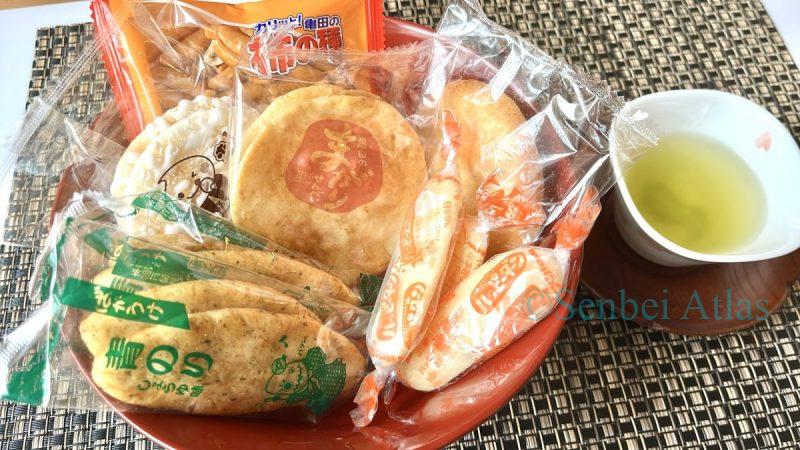
While the image of Japanese senbei overseas might be that they are incredibly hard, the truth is that most senbei in Japan today have a much lighter texture.
In fact, crackers as hard as the traditional variety are actually in the minority.
The majority of senbei sold at supermarkets and convenience stores are light, crispy, and crunchy.
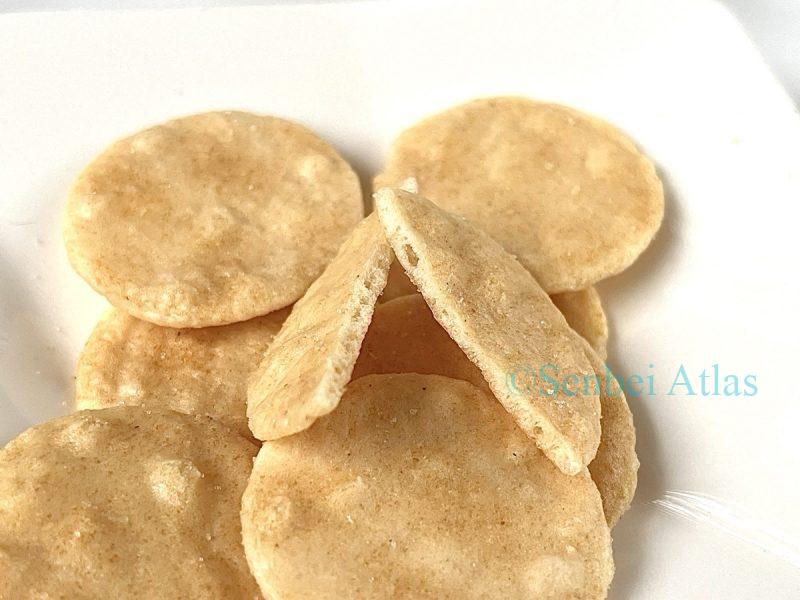
There are many different types, such as Happy Turn (ハッピーターン), which has a fluffy and melt-in-your-mouth texture, or Usuyaki (うす焼), which are extra-thin crackers with a pleasant snap. (Check out my reviews for each snack below.)
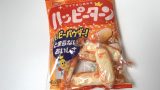

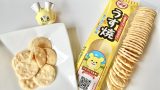
In short, there is a huge variety of Japanese rice crackers, and you’ll find a wide range of different textures! Beyond just the texture, the flavors are incredibly diverse too 💕
For more details on the different textures and flavors of senbei, check out this comprehensive guide!
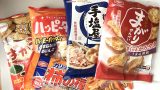
Why Many People Think Rice Crackers Are Bland
But texture isn’t the only thing people sometimes misunderstand about Japanese rice crackers.
I wonder if people might assume that “rice crackers = bland snacks” because of the plain, health-oriented rice crackers often sold in Western countries?
Senbei vs Rice Crackers: What’s the Difference?
To begin with, senbei is a type of rice cracker. “Rice cracker” is a broad category, and senbei is one specific variety within it.
Since Japanese senbei are often translated simply as “Japanese rice crackers,” it’s easy to fall into a kind of “word association game” where you think: “Rice crackers are bland, so Japanese senbei will be bland, too.”

However, authentic Japanese senbei are anything but bland!
They offer a rich variety of flavors like soy sauce, nori (seaweed), and shrimp, and as I mentioned before, the textures are just as diverse.
Furthermore, Japanese rice snacks are classified into three types: senbei, okaki, and arare. (I explain the differences between senbei, okaki, and arare in detail in this article!)

In short, Japanese rice snacks are a completely different world from the “bland rice crackers” you might be imagining!
Senbei Is “Japan’s Savory Umami Rice Snacks!”
Did you notice the subtitle of this website: “Senbei (Japan’s Savory Umami Rice Snacks)“?
I chose this specifically instead of just writing “Japanese rice crackers.” I wanted to avoid the “bland” image often associated with rice crackers and instead convey that senbei are savory and packed with umami.
Traditional hard senbei are delicious to many Japanese people, including myself 😋
However, if you ever feel like they aren’t quite for you, please try other varieties available you can find at Japanese supermarkets!
You will definitely find a savory snack that suits your taste perfectly! ✨
As I mentioned earlier, these two articles are the best starting point to understand the basics of Japanese rice snacks ✨