Among the brands featured in my previous post about Depachika Hinamatsuri Hina Arare (Japan’s Savory Umami Rice Snacks), today I’m highlighting Ginza Akebono (銀座あけぼの).
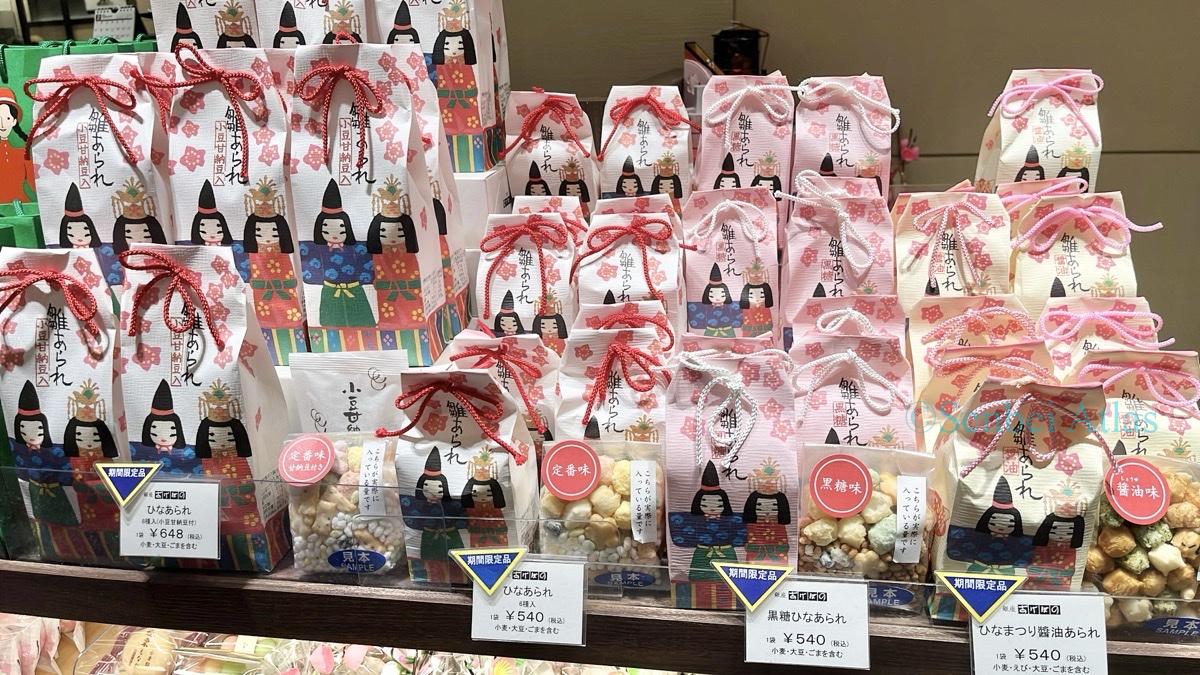
Out of the four types of Hinamatsuri snacks they offer, I picked up their “Soy Sauce Flavor (Shoyu)” to share with you!
These are Kansai region style Hina Arare made from 100% Japanese glutinous rice (Mochigome).
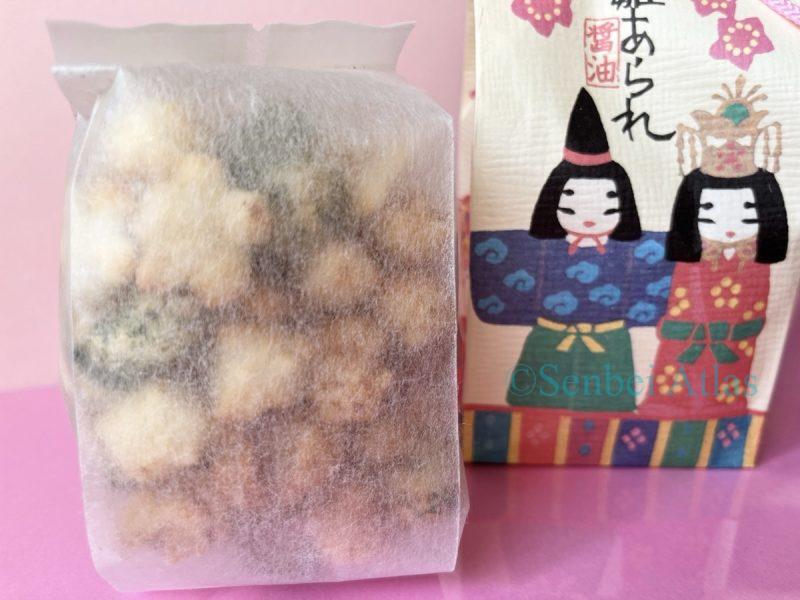
Classical Japanese Packaging
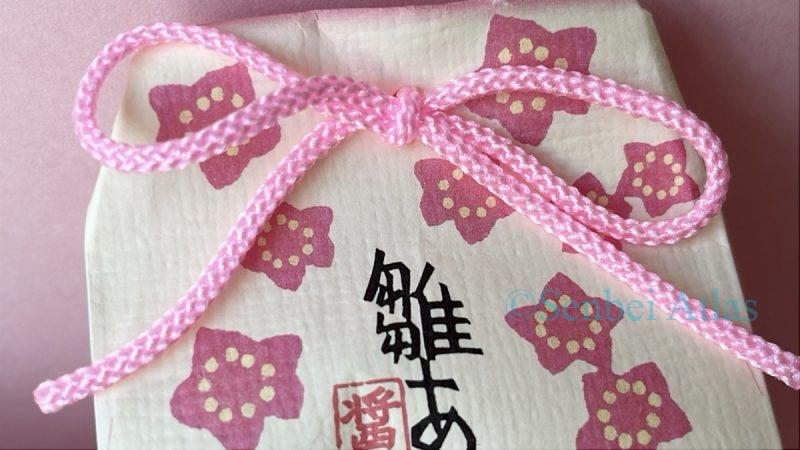
The package features a traditional Japanese paper styling, with the top tied in a pink Kumihimo (組紐) bowknot.
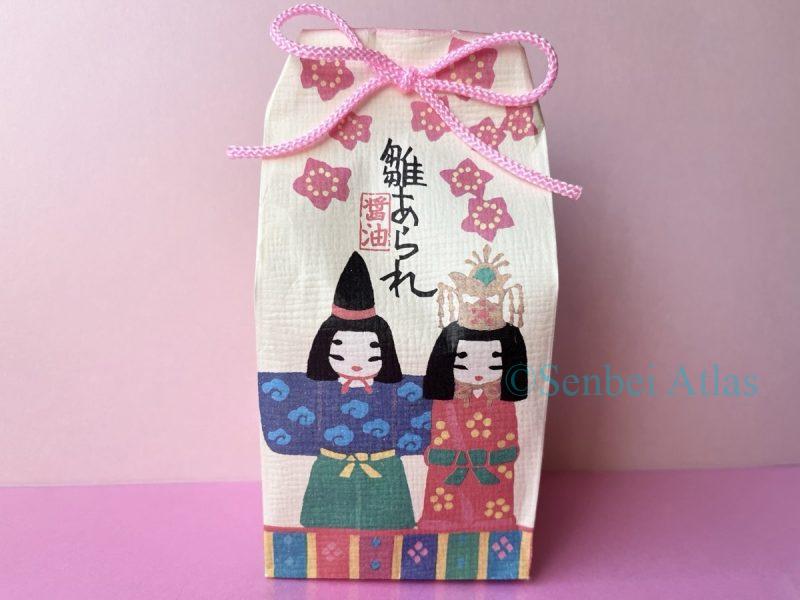
With its slim, self-standing shape and vintage Hina doll illustrations, it’s designed perfectly to be displayed right on a Hinadan (doll altar).
Note: The Story Behind Kumihimo and the Knot 🎀
Kumihimo is a braided cord made by interlacing multiple threads. It symbolizes “binding a connection,” making it a fitting decoration for Hinamatsuri to wish for a child’s healthy growth.
The bowknot (Chou-musubi) style is used for “celebrations one wishes to happen repeatedly,” because it can be untied and retied again and again. Since Hinamatsuri is an annual event to celebrate a child’s growth, this is why the bowknot is used for the Hina-arare package.
The savory snacks come in an inner package that looks like it’s wrapped in a thin layer of Washi paper, exuding a sense of high quality.
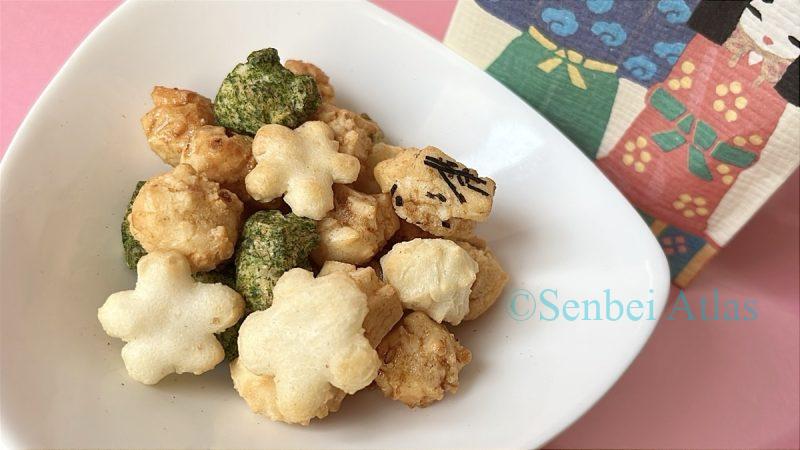
A Sophisticated Blend of Various Soy Sauce Flavors
The Hina Arare I bought this time is a savory, non-sweet type with a soy sauce base. It includes not only round shapes but also flower shapes, and in this subtle arrangement, I can feel the care of a regular Depachika brand 🌸
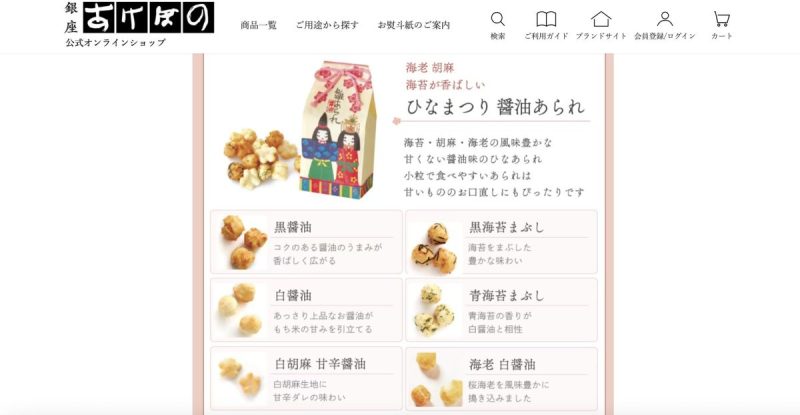
According to the official website, there are six flavors in total: Black Soy Sauce, White Soy Sauce, Sweet and Savory White Sesame Soy Sauce, Black Nori, Aonori, and Shrimp White Soy Sauce.
It’s truly a gourmet treat, as using different types of soy sauce—both Black and White—allows you to enjoy such delicate flavor nuances ✨
The official website says there are 6 varieties, but at first glance, there seem to be 5.
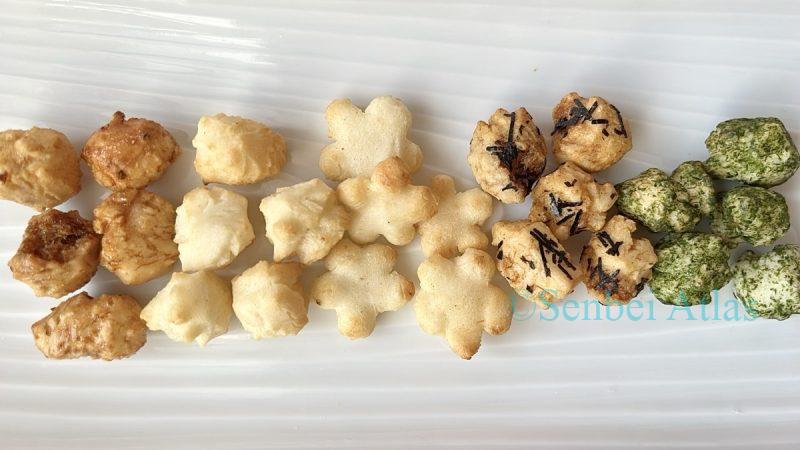
The first bite has a nice, firm crunch, followed by a crisp texture that feels dense and solid rather than airy 😋
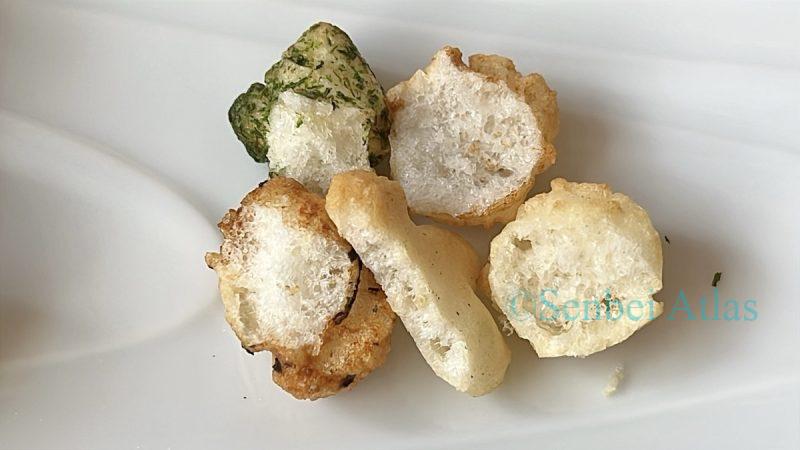
The brown arare have a rich and savory soy sauce flavor. And some of them have a sweet and salty soy sauce taste with a faint hint of sesame. Well, since the flower-shaped ones are supposed to be the white sesame flavor, maybe it’s just my imagination… 🤔
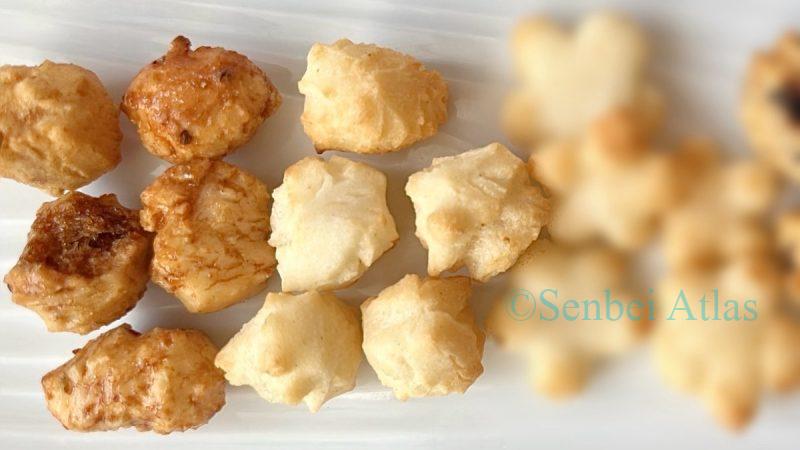
The white arare are saltier than the brown ones and have a light, refreshing soy sauce flavor. Comparing them with the black soy sauce flavor is one of the joys of eating these savory snacks ✨
The two types of Nori (seaweed) , especially the Aonori, which has a rich aroma and acts as a great palate cleanser between the other soy sauce flavors.
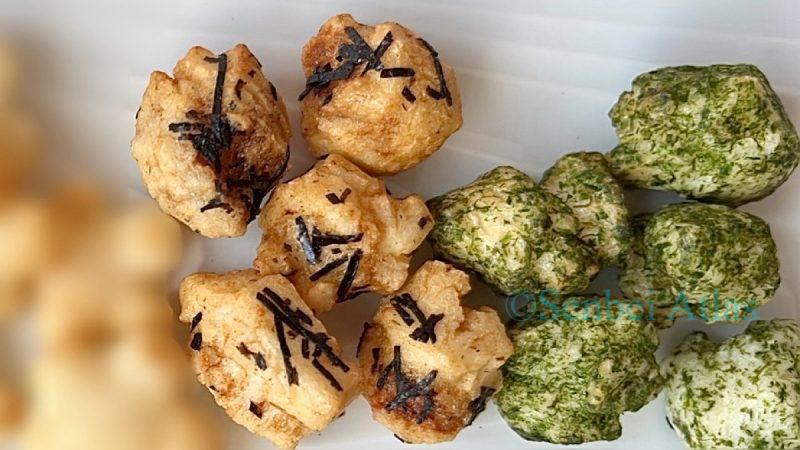
Overall, You can enjoy a variety of soy sauce and seaweed (Nori) flavors 😋
Combined with their satisfyingly firm, crunchy texture, these savory snacks are a highly rewarding treat perfect for adults celebrating Hinamatsuri 💕
“Wait, the Flavor Doesn’t Match the Website?”
Finally, the moment I ate the flower-shaped arare, a question mark popped up over my head. “Wait… this tastes like shrimp, not sesame,” I thought.
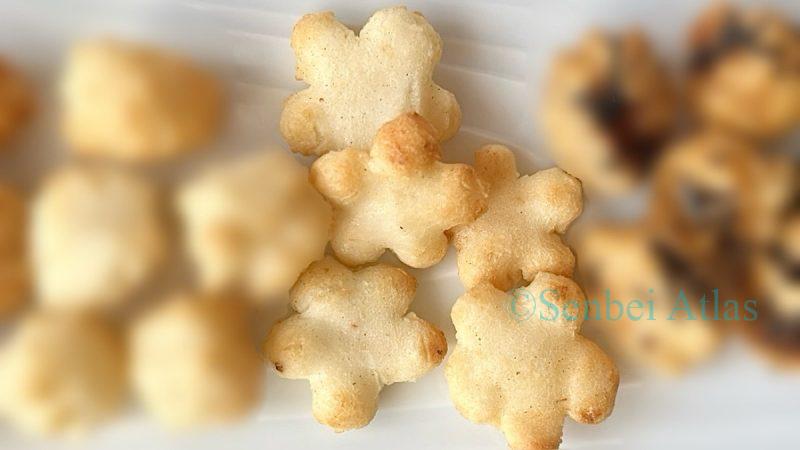
According to the official website image below (bottom left), the flower-shaped ones are supposed to be “white sesame.” I ate a few more to double-check the flavor, but the flower-shaped ones definitely tasted like shrimp.
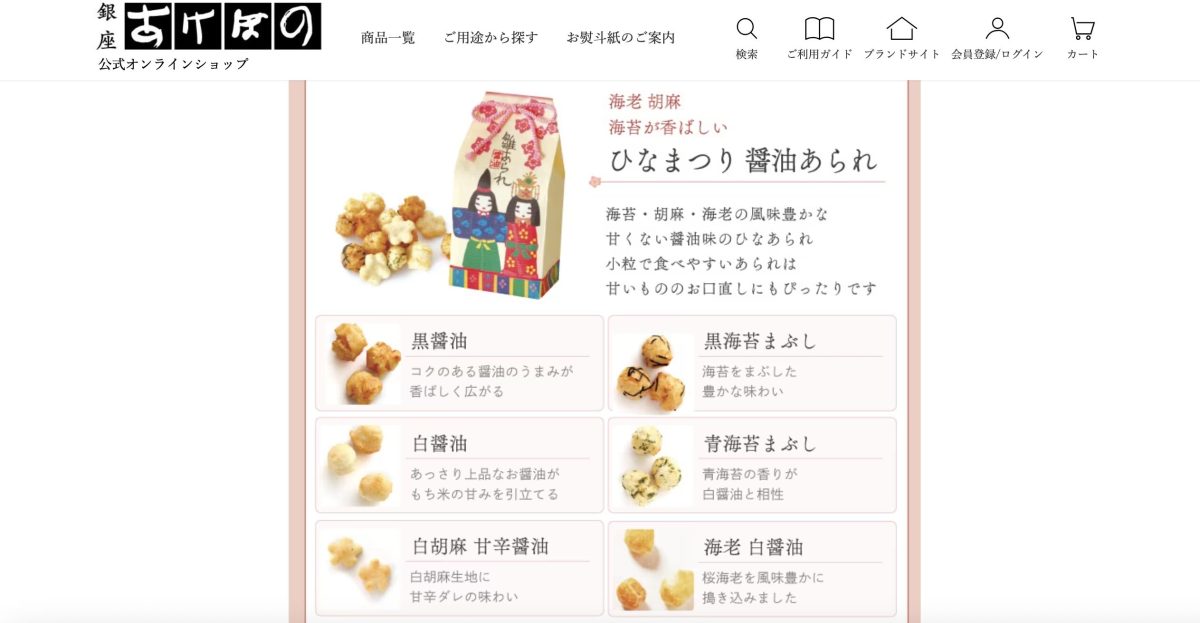
If I were just buying these to eat casually, I wouldn’t have cared which flavor was which and would have just enjoyed them.
However, since I am writing this review while comparing it to the official information, I felt I couldn’t just let it slide. So, I took the plunge and reached out to Ginza Akebono to inquire!
“The website states that the flower-shaped arare are ‘White Sesame,’ but they actually taste like shrimp. Is the description on the website correct?”
The following was their response:
As you pointed out, there was an error in the description on our website.
To be precise, the flower-shaped arare are actually ‘Shrimp White Soy Sauce.’
We have since corrected the relevant section and replaced the image with the correct ‘White Sesame Sweet & Savory Soy Sauce’ one.
The above is only a part of their response; the actual message was much longer and incredibly polite. I was amazed at how quickly they updated their official website! And…
It’s a relief to know that my taste buds are healthy and working perfectly! 😌
The other discrepancy I had noticed—that some of the brown arare had a sweet and salty soy sauce taste with a faint hint of sesame—turned out to be the actual “White Sesame” flavor according to their response.
As of now, the official website has been corrected as follows:
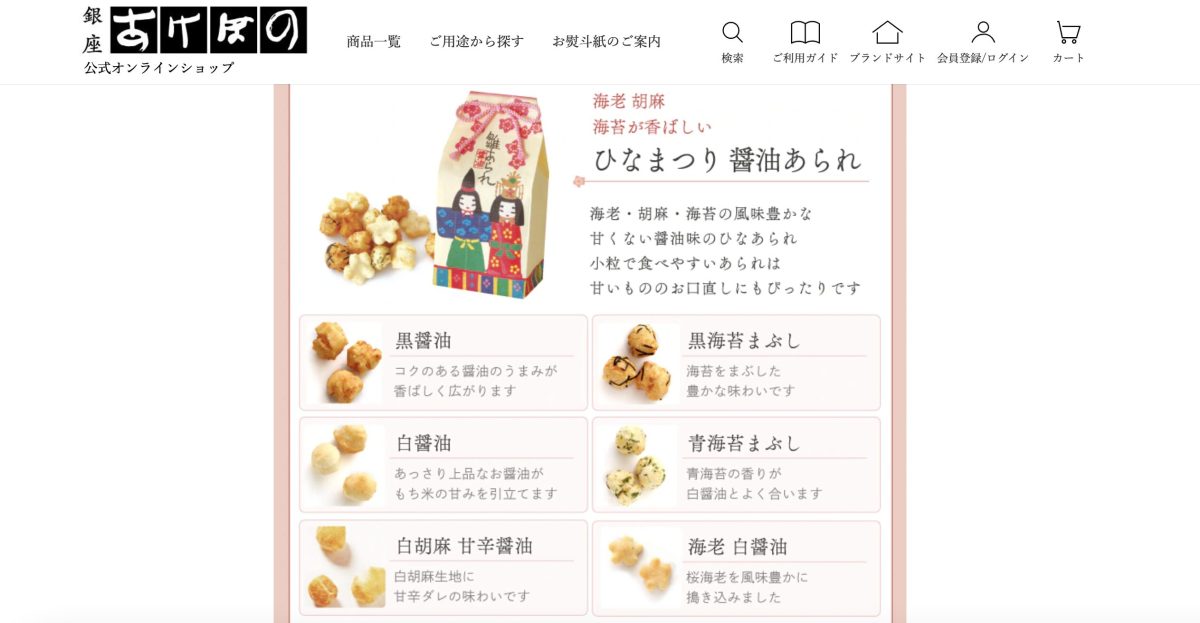
The response from Ginza Akebono was very sincere and incredibly fast!! This is exactly what we call “Kami-taio.” This is exactly the kind of service that makes us an even bigger fan! ✨
Note: “Kami-taio” (God-like response ✨)
In Japan, we call this kind of sincere service, or a “classy move” that goes above and beyond our expectations, “Kami-taio (神対応).” ✨
It’s like when someone is not just polite, but also incredibly thoughtful and proactive in a way that makes you go, “Wow, that’s so cool!” While it’s a relatively new expression, it’s widely used in modern Japan.
If you’re interested in Japanese culture and language, this is a great phrase to remember!
Oh, I almost forgot a very important point! The flower-shaped arare had a lighter, crispier texture compared to the other round ones, and the savory shrimp aroma was absolutely delicious! 🦐😋
Product Details
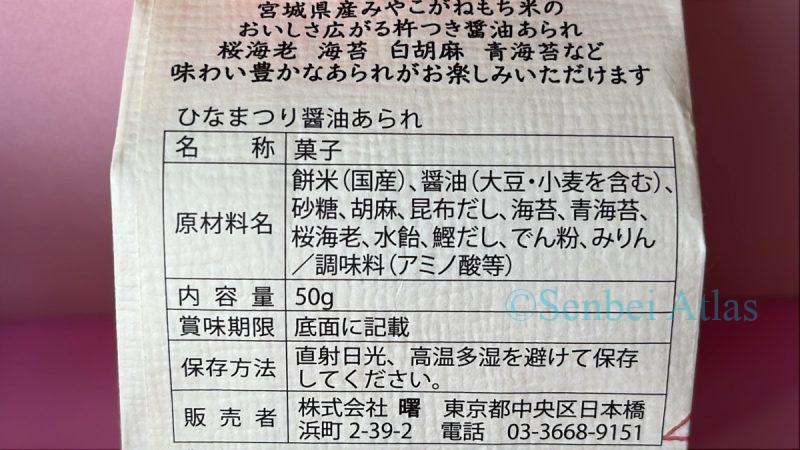
| Product Name | Hinamatsuri Soy Sauce Flavor (ひなまつり 醤油あられ) |
| Manufacturer | Ginza Akebono (銀座あけぼの) |
| Price | 540 yen (tax included) |
| Shelf Life | 20 days or more (as indicated on the back of the package) |
| Allergens | wheat, shrimp, soybeans, sesame |
| Ingredients | Glutinous rice (Domestic), soy sauce (includes soybeans and wheat), sugar, sesame, kombu dashi (kelp stock), nori seaweed, aonori (green seaweed), sakura shrimp, etc. |
▼ Check out my Depachika Hina Arare exploration here.


▼ If you are new to Hinamatsuri, be sure to check out our “Hinamatsuri Overview”!