Have you heard of Hinamatsuri (ひな祭り)? It’s one of Japan’s traditional seasonal festivals.
On this day, we eat a special type of rice cracker called Hina Arare (ひなあられ). Interestingly, Hinamatsuri is the only major Japanese festival where rice crackers take center stage as the main celebratory food! ✨
Now, let me introduce you to the world of Hinamatsuri and the fascinating variety of Hina Arare!
What is Hinamatsuri?
Hinamatsuri is celebrated on March 3rd.
It is a traditional Japanese festival, often called “Girls’ Day,” held to pray for the healthy growth and happiness of young girls.
It is also known as Momo no Sekku (桃の節句), or the Peach Festival. Families with young daughters are the primary observers of this celebration.
Activity 1: Decorating with Hina Dolls
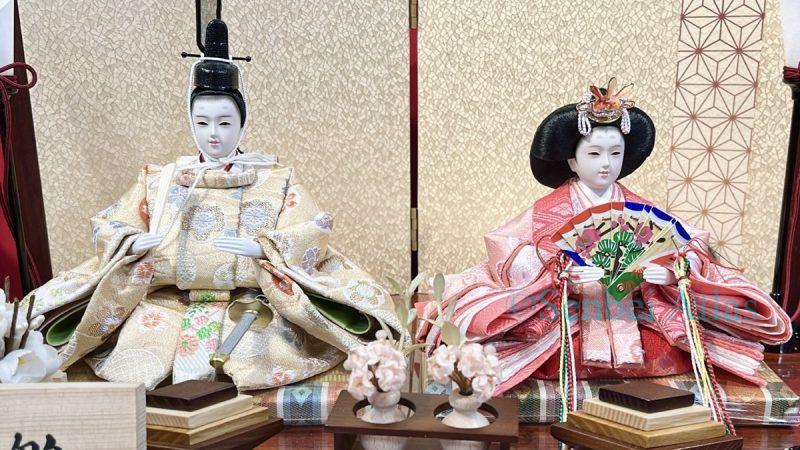
Families display special dolls called Hina ningyo (ひな人形) — also known as Hina Dolls.
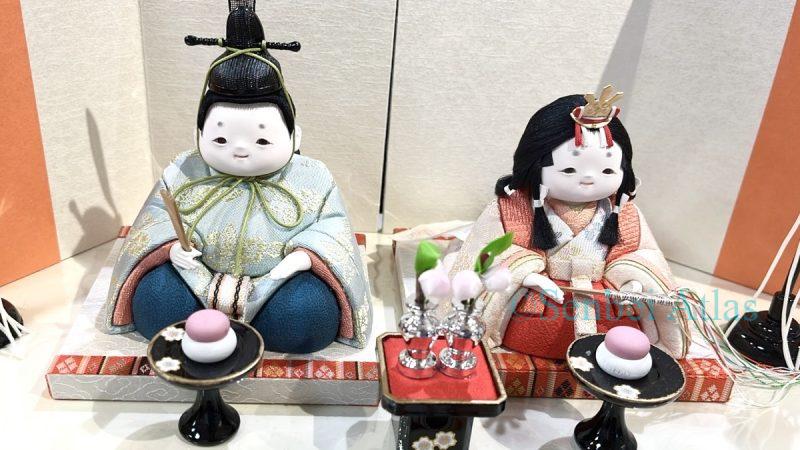
These dolls are decorated to pray for the healthy growth and happy marriage of young girls. They are also believed to act as “substitutes” for children, protecting them by taking on any misfortunes or disasters in their place.
The basic set consists of a pair: the Obina (男びな) (Prince) and Mebina (女びな) (Princess).
- 1
- 2
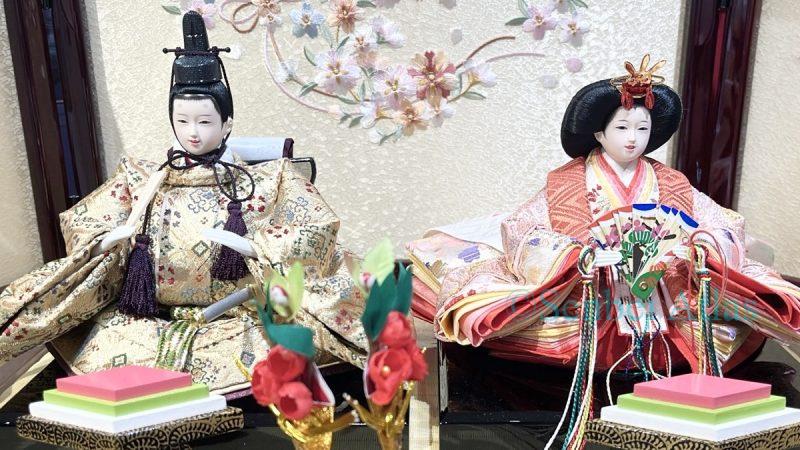
There are also grander displays that include the Sannin Kanjo (三人官女) (Three Court Ladies).
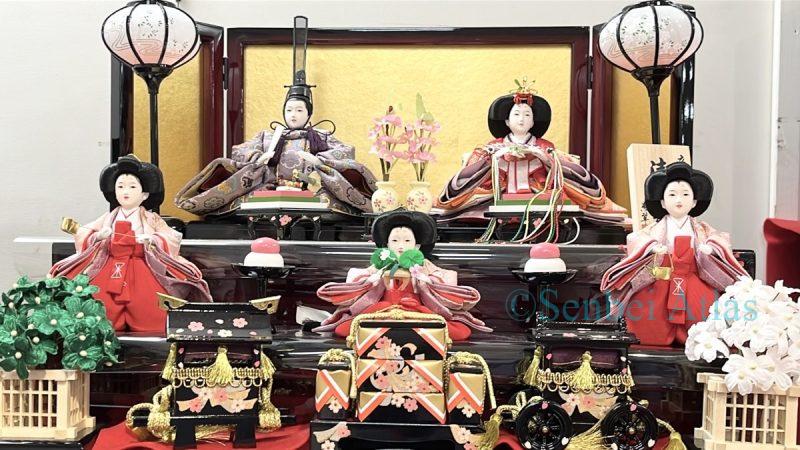
Note: Role of each doll:
・Obina: The Prince. He represents the groom.
・Mebina: The Princess. She represents the bride.
・Sannin-Kanjo: Three court ladies who serve sake and assist the Princess. Look closely—the court lady in the middle is actually sitting! She’s the leader of the team.
Cultural Note: Why you must tidy up quickly:
There is a famous superstition that “if you leave the Hina dolls out after March 3rd, you will get married late.”
This was likely a lesson to discourage untidiness. Also, since leaving them out exposes the dolls to humidity and dust, this “threat” might have been created to avoid the physical risk of damaging the expensive dolls.
In today’s world, saying “you’ll get married late!” is seen as imposing a stereotype and is not good for education, so you don’t hear this superstition as much anymore.
Activity 2: Eating Special Foods for Hinamatsuri
On Hinamatsuri, we celebrate the day by eating special festive foods.
Hina Arare
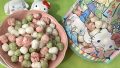
The star of the show when it comes to Hinamatsuri food is Hina Arare, a type of rice cracker! Look, this is Hina Arare! They are tiny, colorful, and super cute rice crackers! ✨
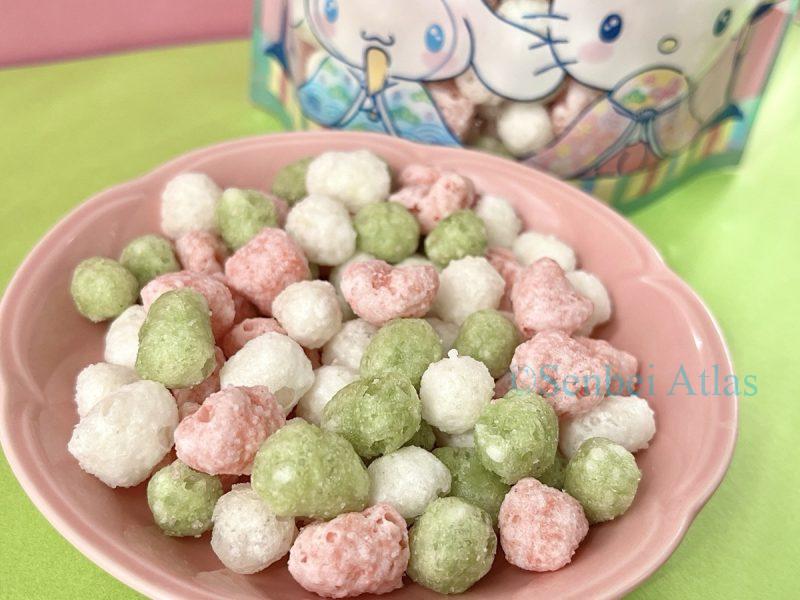
These three colors—white, green, and pink—actually have special meanings. They represent a spring landscape: fresh green buds (green) sprouting from beneath the remaining snow (white), and peach blossoms (pink) blooming 🌸
Also, each color carries a wish: white for “purity,” green for “health,” and pink for “warding off evil.” It’s a way of wishing for protection and good luck through the power of nature.
Digging deeper into Hina Arare, the types are actually completely different depending on whether you are in Eastern Japan (Kanto region) or Western Japan (Kansai region).
| Region | Main Ingredient | Preparation | Appearance | Flavor |
| East (Kanto) | Non-glutinous (Uruchimai) | Popped or baked | Pastel colors, rice-shaped or round | Sweet (Sugar) |
| West (Kansai) | Glutinous (Mochigome) | Baked or fried | Warm colors, round | Various (Salt, Soy sauce, Shrimp, Chocolate) |
Also, there are many mixed-type Hina Arare products that combine both the Kansai and Kanto styles mentioned above. In addition, some budget-friendly Hina Arare are made from wheat flour instead of rice.
Note: Different ingredients, but “Arare”? Why?
You might be thinking, “Wait, isn’t Arare supposed to be a rice cracker made from glutinous rice (Mochigome)? If the Kanto-style version is made from non-glutinous rice (Uruchimai)—or if some are even made from flour instead of rice—why are they still called Hina-arare? 🤔”
If you noticed that, you are already a Senbei master!
You’re right! Traditionally, Arare is defined as being made from glutinous rice.
However, in the Kanto region, it is a long-standing custom to call them “Arare” even when they are made from non-glutinous rice.
As for those made from flour, that’s likely due to “adult reasons” (a cost-effective way to produce something similar to Hina-arare), though there are various theories!
Other foods
Besides Hina Arare, it is common to eat Hishi Mochi, and Chirashi Zushi during Hinamatsuri.

To be honest, Chirashi Zushi often steals the spotlight as the main dish.
BUT! When it comes to Hinamatsuri sweets, it is undoubtedly Hina Arare! Sure, there are Hinamatsuri cakes out there, but Hina Arare is definitely the true symbol of this festival’s treats!! (Me being desperate here…)
Celebrate Spring with Hina Arare 🌸
Hina Arare is only available for a limited time until Hinamatsuri (March 3rd).
You can find Hina Arare almost anywhere this time of year—at Japanese supermarkets, convenience stores, and the basement food halls of department stores (Depachika)!
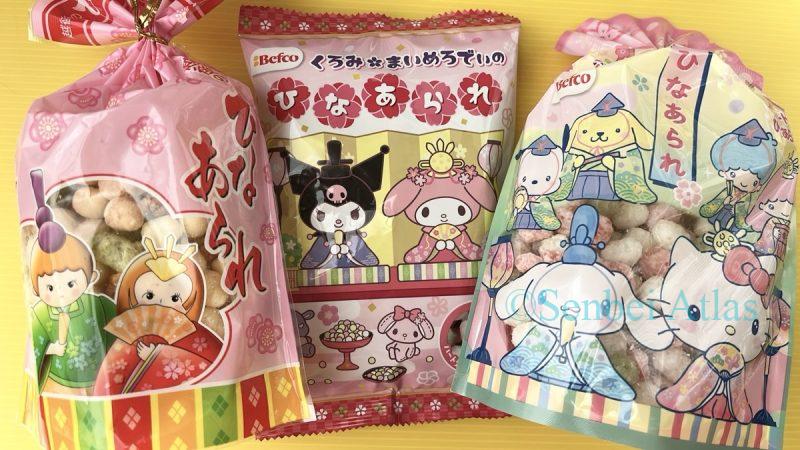
It’s so colorful and cute—I highly recommend it as a souvenir. If you’re in Japan during this season, why not try some?
▼ Your first step to becoming a Senbei master ✨

▼ Recommended if you are interested in Japanese culture!